
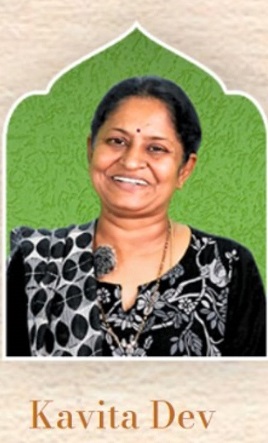
Kavitha Dev Nadimpalli, Founder, Samarpann Natural Farms, Raipur, Chhattisgarh, points out that there is more to honey than just sweetness, and it can be made into many useful products.
The Idea behind starting BeeBliss is to understand that a bee gives us much more than honey. Inside and around a beehive are several natural resources with enormous potential—honey, beeswax, bee pollen, and bee propolis. Each has its own purpose in the hive, and each can also become the foundation for useful, value-added products.
This understanding is at the heart of BeeBliss, and BeeBliss is an initiative of Samarpann Natural Farms that explores how bee-derived products can be transformed into natural, useful, and commercially viable products while creating greater awareness about beekeeping, pollination, natural farming, women entrepreneurship, and rural livelihoods.
Our objective is not simply to sell honey. We want to change the way people look at the bee box. A bee box can be seen not only as a source of honey, but as a small centre of pollination, biodiversity, natural resources, value addition, and livelihood creation.
We wanted to explore more about bees and the products that we get from them. Our journey into bees came through farming. We began our agricultural journey with an interest in understanding where our food comes from and how it is produced. Coming from an urban and educational background, farming was initially unfamiliar territory. As we moved towards natural farming, we faced an important question:
How can farming remain economically sustainable while working with nature rather than against it?
Bees became an important part of the answer. Bees play an essential role in pollination. They connect farms, flowers, biodiversity, and food production. But we also realised that simply keeping bee boxes was not enough. Farmers needed to know what to do with the products produced by the bees.
They needed knowledge about collection, handling, processing, value addition, packaging, and markets. That realisation gradually led to the idea of BeeBliss.
BeeBliss is built around four important bee-derived resources: Honey, Beeswax, Bee Pollen, and Bee Propolis. Rather than looking at these as separate commodities, we look at them as natural raw materials with possibilities for further value addition.
Our approach to the same goes like this:
Bee product → understanding its properties → developing a useful application → creating a finished product → creating market value.
Beyond honey’s golden promise
Honey is the most familiar product of the beehive, but we believe its potential goes far beyond a bottle of liquid honey. We explore different ways of presenting honey as a value-added product, including: honey powder, creamed honey, infused and flavoured honey, honey-based food products, natural confectionery possibilities, bakery applications, and other innovative formats.
When we talk about each of the value-added products, honey powder is particularly interesting because it provides a convenient alternative to liquid honey. It can be explored for use in beverages, bakery products, food preparations, and other applications where handling liquid honey may not always be convenient.
Coming to creamed honey, we find that the natural crystallisation of honey is sometimes misunderstood by consumers. Instead of treating crystallisation as a problem, it can be used to create a smooth, spreadable creamed honey. This opens another way of enjoying honey—as a spread or topping rather than only as a liquid sweetener.
Talking about infused honey, we should know that honey can also become the base for differentiated products by combining it with appropriate natural ingredients. Examples we have explored include ginger, lemon and herbs. The idea is not simply to flavour honey, but to create new product experiences around an ingredient people already know and trust.
When we talk about beeswax that turns a natural material into products, we realise how beeswax is another valuable resource from the hive. We believe beeswax should not be treated merely as a secondary product. It can become the foundation for a range of useful products.
At BeeBliss, we work on various possibilities that include: cold-process soaps, beeswax and honey soaps, lip balms, body butters, solid moisturiser bars, wax sachets, beeswax wraps, candles, and other natural personal-care products. Beeswax works particularly well with natural oils and other ingredients, making it suitable for products where texture, structure, and protective properties are important.
The next one is bee pollen, which is a rich resource from the beehive. Bee pollen begins with flowers. Bees collect pollen from flowering plants and bring it back to the hive, where it forms an important part of the colony's food system. For BeeBliss, bee pollen represents another opportunity to explore nutritional and value-added applications. The larger message is important: When farmers look at a bee box only through the lens of honey, they see only one part of its potential.
Yet another of nature’s hive materials is bee propolis. Propolis is a resinous material collected by bees from plant sources and used by bees within the hive. It has attracted interest for various traditional and modern applications, particularly in personal care and oral-care formulations.
At BeeBliss, we explore its potential in products such as natural soaps, tooth powders, oral-care products, personal-care formulations, and other products where propolis can be appropriately incorporated. The emphasis is on responsible formulation, quality, and understanding the properties of the ingredient rather than using it simply as a marketing claim.
A philosophy of natural care
BeeBliss is built around a simple principle: Natural ingredients deserve thoughtful formulation. We do not believe that a product becomes better merely because more ingredients are added.
We first ask questions such as: What is the natural material? What are its properties? What is a meaningful use for it? Can we create a useful product without unnecessary additions?
This philosophy guides our product development. Our broader product portfolio includes natural personal-care and lifestyle products based around honey, beeswax, bee pollen, and propolis, including soaps, lip care, body care, hair care, oral care, wax products, and innovative honey-based products.
One of our key objectives is to demonstrate the difference between selling a raw commodity and creating value from it.
For example: Honey → Honey Powder, Honey → Creamed Honey, Honey → Infused Honey, Beeswax → Soap, Beeswax → Lip Balm, Beeswax → Solid Moisturiser, Beeswax → Wax Products, Propolis → Oral Care, Propolis → Personal Care, and Bee Pollen → Value-added Nutritional Applications.
The value is not created only through manufacturing. It is created through knowledge, formulation, processing, branding, packaging, and market access.
Harmony of hive and farm
BeeBliss is not only about products. It is also about the relationship between bees and agriculture. Bees move between flowers and farms. Their role in pollination connects them directly with agricultural production and biodiversity.
This creates a beautiful cycle: Flowers support bees. Bees support pollination. Pollination supports agriculture. Agriculture provides the landscape for bees. Beekeeping provides natural products. Value addition creates livelihood opportunities.
This is why we see beekeeping as part of a larger natural-farming ecosystem rather than as an isolated activity.
Many farmers understand that bees are useful for pollination. However, there is often a gap between understanding the benefit of bees and knowing how to build a livelihood around them.
A farmer may have a bee box but still wonder: How do I manage it? When should I harvest? How do I maintain quality? What can I do with beeswax? What can I do with propolis? How can pollen be handled? How do I process honey? How do I package and sell these products? How can I find a market?
This is where training and value addition become important. We aim to help create an ecosystem where farmers are not restricted to selling raw honey to a middleman. They can become part of a larger value chain.
Growing together, rising together
Small producers often face a common problem: individually, their production may be too small to access larger markets.
Collective action can change that. Farmers, beekeepers, and self-help groups can work together to: aggregate products, share resources, access training, use common processing facilities, develop products, create common branding, improve packaging, access larger markets, and strengthen their bargaining position.
Different people can contribute different skills. One person may focus on beekeeping. Another may manage processing. Someone else may handle packaging. Another person may focus on marketing and customer relationships. This creates an ecosystem rather than an individual business.
Our work has gradually expanded beyond our own farm. Through our farming and awareness activities, we have been connected with a wider community of approximately 400 farmers. The larger vision is to encourage farmers to understand that the bee box has several dimensions: Pollination + Agriculture + Natural Products + Value Addition + Entrepreneurship.
The intention is to create awareness and eventually build stronger networks between farmers, beekeepers, women, self-help groups, markets and consumers.
Seeds of women’s empowerment
One of the areas we see enormous potential in is women-led entrepreneurship. Many bee-derived products can be developed into small-scale enterprises with appropriate training.
Women and self-help groups can potentially participate in: soap making, lip-care products, body-care products, wax products, honey-based products, packaging, product presentation, customer communication, and sales and marketing.
For women, entrepreneurship is not only about income. It is also about acquiring skills, confidence, independence, and the ability to participate in a value chain. BeeBliss therefore sees women not simply as beneficiaries, but as potential creators and entrepreneurs.
Challenges along the way
Beekeeping and bee-product value addition also come with challenges.
Awareness: Many farmers do not know how to manage bee colonies or use the products obtained from them.
Training: Beekeeping requires practical knowledge. Farmers need to understand bee behaviour, colony management, harvesting, and safe handling.
Fear of Bee Stings: Fear can discourage people from keeping bees. Proper training and protective equipment can help people understand how to work safely around colonies.
Processing: Honey and other bee products require attention to hygiene, temperature, moisture, storage, and handling.
Quality: Natural products can vary according to season, floral source, temperature, and other conditions. Maintaining consistent processes and documenting procedures is important.
Market Access: Producing a good product is only one part of entrepreneurship. Packaging, branding, customer education and market linkages are equally important.
A vision beyond the hive
Our vision is much larger than creating a range of honey and personal-care products. We want to demonstrate a model in which nature itself becomes the starting point for entrepreneurship.
A bee can connect: Agriculture, Pollination, Biodiversity, Natural farming, Food, Personal care, Women entrepreneurship, Rural livelihoods, Value addition, and Markets. The bee is tiny. But the ecosystem around it is enormous.
Natural does not mean unscientific. This is an important principle for us. We strongly believe that natural products must still be developed with science, hygiene, consistency, and discipline. Natural variation is part of bee products. However, commercial products require appropriate quality control.
We therefore believe in: proper processing, cleanliness, controlled conditions, documentation, appropriate testing, responsible formulation, suitable packaging, correct labelling, and compliance with applicable regulations.
The goal is to preserve the natural character of the ingredients while maintaining the standards expected of a responsible enterprise.
We want to change one basic perception:
A bee box is not just a honey box. It can be a pollination box. It can be a natural-resource box. It can be a value-addition box. It can be a livelihood box. And with knowledge, training, and market access, it can become a small but meaningful enterprise opportunity for rural communities.
The future of BeeBliss lies in developing a stronger connection between farmers, bees, natural products, and consumers.
We would like to see more farmers understand the potential of beekeeping, more women trained in bee-product value addition, and more consumers understand where natural products originate.
We also see opportunities for collaboration with: Farmer groups, self-help groups, NGOs, government departments, agricultural institutions, startups, researchers, natural-product companies, and retailers and consumers.
Our goal is to build partnerships that allow knowledge and value to move back into farming communities.
The BeeBliss philosophy
At the heart of BeeBliss is a simple belief:
“Use what nature gives us responsibly. Add knowledge before adding ingredients. Create value without losing the connection to nature. And ensure that value reaches the people who nurture the resource.”
For us, the journey begins with a bee. But it does not end with honey. It ends with knowledge, products, entrepreneurship and stronger rural livelihoods.
Kavitha Dev Nadimpalli, founder of Samarpann Natural Farms, Raipur, Chhattisgarh, began her journey from an educational background and gradually moved towards agriculture and natural farming. Her experience in farming led her to explore the relationship between agriculture, pollination, and sustainable livelihoods. This eventually developed into an interest in beekeeping and, subsequently, in the value-addition possibilities of honey, beeswax, bee pollen and propolis.
Through BeeBliss, her focus is on demonstrating how natural resources can become the foundation for innovative products while creating opportunities for farmers, women and rural entrepreneurs. Her approach combines farming, entrepreneurship, product development, awareness and community participation.
Contact details
Kavitha Dev Nadimpalli
Founder, Samarpann Natural Farms, BeeBliss, Raipur, Chhattisgarh, India
M: 9302616888
E: kavithadevnadimpalli@gmail.com
The Idea behind starting BeeBliss is to understand that a bee gives us much more than honey. Inside and around a beehive are several natural resources with enormous potential—honey, beeswax, bee pollen, and bee propolis. Each has its own purpose in the hive, and each can also become the foundation for useful, value-added products.
This understanding is at the heart of BeeBliss, and BeeBliss is an initiative of Samarpann Natural Farms that explores how bee-derived products can be transformed into natural, useful, and commercially viable products while creating greater awareness about beekeeping, pollination, natural farming, women entrepreneurship, and rural livelihoods.
Our objective is not simply to sell honey. We want to change the way people look at the bee box. A bee box can be seen not only as a source of honey, but as a small centre of pollination, biodiversity, natural resources, value addition, and livelihood creation.
We wanted to explore more about bees and the products that we get from them. Our journey into bees came through farming. We began our agricultural journey with an interest in understanding where our food comes from and how it is produced. Coming from an urban and educational background, farming was initially unfamiliar territory. As we moved towards natural farming, we faced an important question:
How can farming remain economically sustainable while working with nature rather than against it?
Bees became an important part of the answer. Bees play an essential role in pollination. They connect farms, flowers, biodiversity, and food production. But we also realised that simply keeping bee boxes was not enough. Farmers needed to know what to do with the products produced by the bees.
They needed knowledge about collection, handling, processing, value addition, packaging, and markets. That realisation gradually led to the idea of BeeBliss.
BeeBliss is built around four important bee-derived resources: Honey, Beeswax, Bee Pollen, and Bee Propolis. Rather than looking at these as separate commodities, we look at them as natural raw materials with possibilities for further value addition.
Our approach to the same goes like this:
Bee product → understanding its properties → developing a useful application → creating a finished product → creating market value.
Beyond honey’s golden promise
Honey is the most familiar product of the beehive, but we believe its potential goes far beyond a bottle of liquid honey. We explore different ways of presenting honey as a value-added product, including: honey powder, creamed honey, infused and flavoured honey, honey-based food products, natural confectionery possibilities, bakery applications, and other innovative formats.
When we talk about each of the value-added products, honey powder is particularly interesting because it provides a convenient alternative to liquid honey. It can be explored for use in beverages, bakery products, food preparations, and other applications where handling liquid honey may not always be convenient.
Coming to creamed honey, we find that the natural crystallisation of honey is sometimes misunderstood by consumers. Instead of treating crystallisation as a problem, it can be used to create a smooth, spreadable creamed honey. This opens another way of enjoying honey—as a spread or topping rather than only as a liquid sweetener.
Talking about infused honey, we should know that honey can also become the base for differentiated products by combining it with appropriate natural ingredients. Examples we have explored include ginger, lemon and herbs. The idea is not simply to flavour honey, but to create new product experiences around an ingredient people already know and trust.
When we talk about beeswax that turns a natural material into products, we realise how beeswax is another valuable resource from the hive. We believe beeswax should not be treated merely as a secondary product. It can become the foundation for a range of useful products.
At BeeBliss, we work on various possibilities that include: cold-process soaps, beeswax and honey soaps, lip balms, body butters, solid moisturiser bars, wax sachets, beeswax wraps, candles, and other natural personal-care products. Beeswax works particularly well with natural oils and other ingredients, making it suitable for products where texture, structure, and protective properties are important.
The next one is bee pollen, which is a rich resource from the beehive. Bee pollen begins with flowers. Bees collect pollen from flowering plants and bring it back to the hive, where it forms an important part of the colony's food system. For BeeBliss, bee pollen represents another opportunity to explore nutritional and value-added applications. The larger message is important: When farmers look at a bee box only through the lens of honey, they see only one part of its potential.
Yet another of nature’s hive materials is bee propolis. Propolis is a resinous material collected by bees from plant sources and used by bees within the hive. It has attracted interest for various traditional and modern applications, particularly in personal care and oral-care formulations.
At BeeBliss, we explore its potential in products such as natural soaps, tooth powders, oral-care products, personal-care formulations, and other products where propolis can be appropriately incorporated. The emphasis is on responsible formulation, quality, and understanding the properties of the ingredient rather than using it simply as a marketing claim.
A philosophy of natural care
BeeBliss is built around a simple principle: Natural ingredients deserve thoughtful formulation. We do not believe that a product becomes better merely because more ingredients are added.
We first ask questions such as: What is the natural material? What are its properties? What is a meaningful use for it? Can we create a useful product without unnecessary additions?
This philosophy guides our product development. Our broader product portfolio includes natural personal-care and lifestyle products based around honey, beeswax, bee pollen, and propolis, including soaps, lip care, body care, hair care, oral care, wax products, and innovative honey-based products.
One of our key objectives is to demonstrate the difference between selling a raw commodity and creating value from it.
For example: Honey → Honey Powder, Honey → Creamed Honey, Honey → Infused Honey, Beeswax → Soap, Beeswax → Lip Balm, Beeswax → Solid Moisturiser, Beeswax → Wax Products, Propolis → Oral Care, Propolis → Personal Care, and Bee Pollen → Value-added Nutritional Applications.
The value is not created only through manufacturing. It is created through knowledge, formulation, processing, branding, packaging, and market access.
Harmony of hive and farm
BeeBliss is not only about products. It is also about the relationship between bees and agriculture. Bees move between flowers and farms. Their role in pollination connects them directly with agricultural production and biodiversity.
This creates a beautiful cycle: Flowers support bees. Bees support pollination. Pollination supports agriculture. Agriculture provides the landscape for bees. Beekeeping provides natural products. Value addition creates livelihood opportunities.
This is why we see beekeeping as part of a larger natural-farming ecosystem rather than as an isolated activity.
Many farmers understand that bees are useful for pollination. However, there is often a gap between understanding the benefit of bees and knowing how to build a livelihood around them.
A farmer may have a bee box but still wonder: How do I manage it? When should I harvest? How do I maintain quality? What can I do with beeswax? What can I do with propolis? How can pollen be handled? How do I process honey? How do I package and sell these products? How can I find a market?
This is where training and value addition become important. We aim to help create an ecosystem where farmers are not restricted to selling raw honey to a middleman. They can become part of a larger value chain.
Growing together, rising together
Small producers often face a common problem: individually, their production may be too small to access larger markets.
Collective action can change that. Farmers, beekeepers, and self-help groups can work together to: aggregate products, share resources, access training, use common processing facilities, develop products, create common branding, improve packaging, access larger markets, and strengthen their bargaining position.
Different people can contribute different skills. One person may focus on beekeeping. Another may manage processing. Someone else may handle packaging. Another person may focus on marketing and customer relationships. This creates an ecosystem rather than an individual business.
Our work has gradually expanded beyond our own farm. Through our farming and awareness activities, we have been connected with a wider community of approximately 400 farmers. The larger vision is to encourage farmers to understand that the bee box has several dimensions: Pollination + Agriculture + Natural Products + Value Addition + Entrepreneurship.
The intention is to create awareness and eventually build stronger networks between farmers, beekeepers, women, self-help groups, markets and consumers.
Seeds of women’s empowerment
One of the areas we see enormous potential in is women-led entrepreneurship. Many bee-derived products can be developed into small-scale enterprises with appropriate training.
Women and self-help groups can potentially participate in: soap making, lip-care products, body-care products, wax products, honey-based products, packaging, product presentation, customer communication, and sales and marketing.
For women, entrepreneurship is not only about income. It is also about acquiring skills, confidence, independence, and the ability to participate in a value chain. BeeBliss therefore sees women not simply as beneficiaries, but as potential creators and entrepreneurs.
Challenges along the way
Beekeeping and bee-product value addition also come with challenges.
Awareness: Many farmers do not know how to manage bee colonies or use the products obtained from them.
Training: Beekeeping requires practical knowledge. Farmers need to understand bee behaviour, colony management, harvesting, and safe handling.
Fear of Bee Stings: Fear can discourage people from keeping bees. Proper training and protective equipment can help people understand how to work safely around colonies.
Processing: Honey and other bee products require attention to hygiene, temperature, moisture, storage, and handling.
Quality: Natural products can vary according to season, floral source, temperature, and other conditions. Maintaining consistent processes and documenting procedures is important.
Market Access: Producing a good product is only one part of entrepreneurship. Packaging, branding, customer education and market linkages are equally important.
A vision beyond the hive
Our vision is much larger than creating a range of honey and personal-care products. We want to demonstrate a model in which nature itself becomes the starting point for entrepreneurship.
A bee can connect: Agriculture, Pollination, Biodiversity, Natural farming, Food, Personal care, Women entrepreneurship, Rural livelihoods, Value addition, and Markets. The bee is tiny. But the ecosystem around it is enormous.
Natural does not mean unscientific. This is an important principle for us. We strongly believe that natural products must still be developed with science, hygiene, consistency, and discipline. Natural variation is part of bee products. However, commercial products require appropriate quality control.
We therefore believe in: proper processing, cleanliness, controlled conditions, documentation, appropriate testing, responsible formulation, suitable packaging, correct labelling, and compliance with applicable regulations.
The goal is to preserve the natural character of the ingredients while maintaining the standards expected of a responsible enterprise.
We want to change one basic perception:
A bee box is not just a honey box. It can be a pollination box. It can be a natural-resource box. It can be a value-addition box. It can be a livelihood box. And with knowledge, training, and market access, it can become a small but meaningful enterprise opportunity for rural communities.
The future of BeeBliss lies in developing a stronger connection between farmers, bees, natural products, and consumers.
We would like to see more farmers understand the potential of beekeeping, more women trained in bee-product value addition, and more consumers understand where natural products originate.
We also see opportunities for collaboration with: Farmer groups, self-help groups, NGOs, government departments, agricultural institutions, startups, researchers, natural-product companies, and retailers and consumers.
Our goal is to build partnerships that allow knowledge and value to move back into farming communities.
The BeeBliss philosophy
At the heart of BeeBliss is a simple belief:
“Use what nature gives us responsibly. Add knowledge before adding ingredients. Create value without losing the connection to nature. And ensure that value reaches the people who nurture the resource.”
For us, the journey begins with a bee. But it does not end with honey. It ends with knowledge, products, entrepreneurship and stronger rural livelihoods.
Kavitha Dev Nadimpalli, founder of Samarpann Natural Farms, Raipur, Chhattisgarh, began her journey from an educational background and gradually moved towards agriculture and natural farming. Her experience in farming led her to explore the relationship between agriculture, pollination, and sustainable livelihoods. This eventually developed into an interest in beekeeping and, subsequently, in the value-addition possibilities of honey, beeswax, bee pollen and propolis.
Through BeeBliss, her focus is on demonstrating how natural resources can become the foundation for innovative products while creating opportunities for farmers, women and rural entrepreneurs. Her approach combines farming, entrepreneurship, product development, awareness and community participation.
Contact details
Kavitha Dev Nadimpalli
Founder, Samarpann Natural Farms, BeeBliss, Raipur, Chhattisgarh, India
M: 9302616888
E: kavithadevnadimpalli@gmail.com