

Simhadri Raghavendra
Tissue culture Banana plants production
Simhadri Raghavendra, Proprietor, M/s Elite Biotechnologies, Anantapur, Andhra Pradesh, explains how tissue culture has completely transformed the way banana plants are produced in modern agriculture. It helps in millions of uniform, high yielding disease-free plants from a single healthy mother plant under controlled laboratory conditions. This method favours better growth, higher yields and consistent fruit quality, and it has become very important for commercial banana cultivation in modern days.
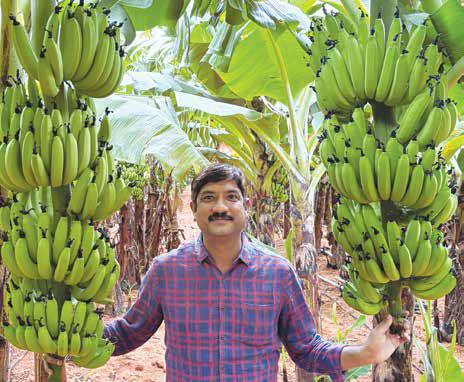
Tissue culture is the process of generating plants from an Ex-plant or Mother plant by using the cells or tissues of the plant. We multiply the young ones by growing them in sterile conditions in a laboratory that is totally devoid of microorganisms. Mainly Grandnaine (G9),Williams and local varieties such as Yelakki,Amritapani ,Sugandhi , Red banana,Rajapuri,Tella Chakkarakeli, and Karpura Chakkarakeli that are grown in South India. The cultures for the G9 variety are imported from Israel - Ginosar Agro and Rehan meristem who are pioneers in Mother block cultivation and maintain the desired conditions for the mother plant. We buy cultures from them, multiply cultures in our lab, harden the plants and sell them to the farmers.
Tissue culture has transformed commercial banana cultivation by enabling the large-scale production of uniform, disease-free planting material. In regions where bananas are a major horticultural crop, tissue culture laboratories now play a crucial role in ensuring consistency, productivity and export competitiveness. Our dedicated facility operates in Anantapur, Andhra Pradesh, with an annual production capacity of approximately 5.0 million plants per annum. The unit focuses primarily on banana tissue culture and has developed specialised laboratory systems, greenhouse infrastructure and standardised protocols to maintain quality at every stage. We were doing tissue culture for pomegranate by selecting the shoot tips and internodes. For sugarcane we select the eye buds and for Fig we select axillary meristems.
Unlike multipurpose laboratories that handle numerous crops simultaneously, a specialised banana facility concentrates on refining protocols for individual varieties. The principal commercial cultivar produced is Grand Naine (G9), along with regionally significant varieties such as Yelakki, Chakkarakeli, Sugandhi, Karpura Valli, Red Banana, Amritapani and Rajapuri. Each variety possesses distinct agronomic behaviour, growth characteristics and market demand, requiring careful adaptation of tissue culture protocols. Usually, we get 1 to 2 ex-plants from the main banana plant.Under the sterile and accepted conditions in the laboratory, we provide the nutrient media(MS media) needed for the growth of the plant. A combination of around 30 nutrients , growth hormones, vitamins and minerals. We incubate the plants in the media, they absorb the nutrients and multiply. In about 4 to 5 weeks, we can get about 3-5 plants from a single plant depending on the species.
For Grandnaine production, primary cultures are sourced from Ginosar Agro and Rehan Meristem , Israel. This organisation maintains an extensive mother plant block where elite plants are screened across multiple generations to confirm genetic stability and fruit quality. Importing certified primary cultures ensures that multiplication begins with superior genetic material. The technique of plant tissue culture is based on the biological principle of totipotency. Totipotency refers to the ability of a single plant cell to regenerate into a complete plant when provided with appropriate aseptic environmental and nutritional conditions. Under natural conditions, cells differentiate into specialised tissues such as leaves, roots or stems. However, the tissue culture method allows scientists to reverse this differentiation process and stimulate new organ formation.
In banana cultivation, conventional propagation relies on suckers that grow from the base of the mother plant. Even though very simple, this method presents several limitations. Suckers vary in size, vigour and age. They may harbour diseases and often produce uneven crop growth. Tissue culture overcomes these issues by producing genetically identical disease free plants under controlled laboratory conditions.
Significance for banana growers
The whole process involves various stages and begins with the selection of a small portion of plant tissue, known as an explant. This explant, typically derived from the healthy mother plant, is introduced into a sterile nutrient medium. The medium provides all the essential minerals, vitamins, carbohydrates and growth regulators necessary for cell division and organ formation.
Most banana tissue culture laboratories use MS medium formulation. The composition includes:
Macronutrients such as nitrogen, phosphorus, potassium, calcium and magnesium
Micronutrients, including iron, zinc, manganese and copper
Vitamins to support metabolic activity
Sucrose as a carbohydrate source
Agar to solidify the medium
The course of the plant development is controlled by plant growth regulators that promote shoot multiplication and stimulate root development. Approximately eighty per cent of the nutrient formulation remains constant across various stages. The critical variation lies in the ratio and concentration of hormones added at different phases of the growth of the plants.
Precise calibration of hormonal balance is essential. Excess nutrients may cause abnormal shoot proliferation, while inadequate nutrient levels can delay root formation. Therefore, each variety requires a carefully studied and standardised protocol to ensure maximum multiplication without compromising genetic stability.
From selection to multiplication
Selection: Mother plant selection is the most crucial stage in tissue culture production. Every plant multiplied in the laboratory has the characteristics identical to the selected mother plant. Therefore, rigorous screening is conducted to identify plants with the best traits.
Selection criteria include:
Fruit length and girth
Uniformity of hands within the bunch
Rind thickness and peel quality
Bunch weight and overall yield
Absence of visible disease symptoms
Structural stability of the plant.
Selected plants are marked in the field and observed through the fruiting cycle. After harvest, healthy suckers are carefully removed and transported to the laboratory under hygienic conditions. This is a crucial phase when we shift the suckers to lab conditions from land conditions. In land conditions, plenty of microbes are present on the surface. So we need to get rid of all these microorganisms. We inoculate the suckers in the media, and the process is called Initiation. After 3 or 4 weeks, the suckers multiply from a single plant to many plants.
Before initiation, two essential tests are performed. Genetic fidelity test to ensure true to type ,possessing the same characteristics as the mother plant.The next one is the virus indexing, which detects any viral infections that may not show any visible symptoms in the field. Only plants that pass both assessments are introduced into culture. A key advantage of sourcing G9 cultures from Israel is the uniformity in hands of the bunch. In conventional plantations, the upper hands of the banana bunch are usually larger, with lower hands gradually going smaller, creating a tapering effect. Israeli-origin cultures demonstrate higher uniformity from top to bottom, an attribute highly demanded in export markets.
Initiation marks the transfer of explants from land conditions into sterile laboratory conditions. Because the plant material collected from the field carries surface microbes, careful sterilisation is essential.
The explant undergoes sequential treatment with disinfectant solutions such as:
Alcohol
Sodium hypochlorite
Silver nitrate
Mercuric chloride
Sterile water
The duration and concentration of each treatment are carefully controlled to eliminate contamination without damaging living tissue. After sterilisation, the explant is transferred to a laminar airflow cabinet equipped with HEPA filters. These filters remove airborne contaminants, creating an aseptic environment. Within this sterile workspace, the explant is trimmed and inoculated into culture medium. The culture bottles are sealed and transferred to controlled growth rooms. The controlled temperature in the lab is about 23 to 24 degrees C. The nutrients are already provided for the plants in the media.
Following initiation, the explant begins to produce multiple shoots within four to five weeks. These shoots are separated and sub-cultured into fresh multiplication medium. Each subculture cycle increases the number of plantlets greatly. Typically, five to seven multiplication cycles are carried out. The multiplication rate varies according to the variety. Grand Naine exhibits a high multiplication rate, making it commercially efficient and highly demanded. Local varieties such as Yelakki and Sugandhi may require modified hormone combinations and longer culture periods. Throughout multiplication, cultures are regularly monitored for contamination and any abnormalities. Any contaminated or atypical cultures are immediately discarded to maintain the quality standards.
During the shooting stage, the hormonal balance is adjusted to encourage lengthening of shoots and development of healthy leaves. Sufficient light intensity and temperature control are maintained to ensure normal growth. This stage strengthens the plantlets in preparation for root induction. In the rooting phase, nutrient combinations are changed to stimulate root formation. Within four to six weeks, plantlets develop well-formed root systems. At this stage, they are referred to as ex-agar plants, indicating readiness for transfer to nursery conditions. The laboratory phase from initiation to rooting may take six to eight months for Grand Naine and up to twelve months for certain local varieties.
Plantlets grown in the lab are grown in controlled environments and stable temperatures of approximately 25–26°C. Direct exposure to field conditions would cause severe stress and mortality. Therefore, a gradual acclimatisation process is essential.
Ex-agar plants are gently and thoroughly washed to remove residual agar and transplanted into trays containing sterile cocopeat. They are placed in greenhouse conditions where humidity and temperature are carefully regulated. Over four to five weeks, humidity is gradually reduced, and light exposure is increased.
Plants are transferred to polybags containing nutrient-enriched growing media. Over six to eight weeks, they develop stronger root systems and thicker stems. Irrigation and fertilisation are carefully monitored to prevent stress. By the end of secondary hardening, plants are strong and healthy enough for field transplantation.
The complete production cycle, from mother plant selection to ready to plant, typically lasts for ten to twelve months.
Infrastructure for tissue culture
A fully functional banana tissue culture laboratory should have some specialised infrastructure, including:
Media preparation room
Autoclaves for sterilisation
Analytical balances , magnetic stirrers, pH meters, etc
Laminar airflow cabinets
HEPA filtration systems
Growth rooms with LED lighting
Air conditioning units
Dedicated washing areas
Bottle washing area
Media storage area
Greenhouses for hardening
Strict segregation of sterile and non-sterile zones should be maintained. Positive air pressure systems ensure that only filtered and clean air enters sensitive areas. Regular calibration of equipment and sanitation/fumigation procedures are essential to prevent any contamination.
Tissue culture certification process
The Government of India, in collaboration with the Department of Biotechnology,National Certification system for Tissue Culture raised Plants(NCSTCP) has specified guidelines for tissue culture plant certification. Laboratories that are into tissue culture of plants must adhere to the documented SOPs covering every stage from mother plant selection to nursery dispatch. Samples are sent to recognised institutions such as GKVK University at regular intervals for virus testing and genetic verification. The Certification confirms that plants are true-to-type and free from viral diseases. Traceability records are maintained for each batch of tissue culture plans, ensuring accountability and transparency.
Benefits of tissue culture
Tissue culture banana plants offer several advantages:
Uniform growth and synchronised flowering
Higher yield potential
Reduced disease incidence
Improved fruit uniformity
Predictable harvest scheduling
Uniform maturity of the plants allows harvesting within short intervals, typically seven to ten days, facilitating efficient marketing of the produce. In export-oriented regions, such synchronisation of the ageing of plans is particularly beneficial.
In Rayalaseema and neighbouring districts, a significant proportion of banana production is earmarked for export. The G9 variety of the banana dominates international trade because of its uniform fruit size, appealing bright colour, and longer shelf life. Export markets expect the farmers to follow strict quality standards, which the tissue culture plants consistently meet.
The adoption of the tissue culture method has significantly enhanced productivity in banana-growing regions. Higher yields of the crop per hectare help in improving farmer income, while uniformity of the produce strengthens export competitiveness. The technology also generates employment in laboratory operations, greenhouse management and logistics. Skilled technicians, microbiologists and nursery workers largely contribute to the value chain. Also, the availability of disease-free planting material reduces the reliance on chemical treatments, supporting more sustainable cultivation practices.
Limitations of tissue culture
Despite its advantages, tissue culture production poses many challenges. Contamination always remains the most persistent issue. Fungal or bacterial growth can spread rapidly through culture rooms, causing substantial losses of the plants.
Another concern is the variation in characteristics, where genetic mutations may happen due to repeated subculturing. Maintaining the optimal multiplication cycles and conducting regular genetic testing will help minimise this risk. Hardening losses can also occur in tissue culture plants if environmental conditions fluctuate heavily. Skilled supervision by the technical personnel and well-maintained greenhouse systems are to be taken care of to prevent huge losses.
Biotechnological progress and impact
Advancements in biotechnology will continue to refine tissue culture methods. Automation, improved culture media formulations and molecular diagnostics will play a major role in enhancing efficiency and reliability. Research into disease resistance and stress tolerance may further strengthen banana cultivation in the face of climate variability. As global demand for high-quality fruit increases, tissue culture remains vital to meeting both domestic consumption and export standards. Continuous improvement in quality control and infrastructure will ensure long-term sustainability.
Banana tissue culture represents a beneficial and transformative technology in modern horticulture. Through careful mother plant selection, precise hormonal regulation, sterile laboratory practices and systematic hardening, millions of uniform and disease-free plants can be produced annually. In export-oriented regions, tissue culture not only improves yield but also ensures proper compliance with international quality standards. By combining scientific precision with agricultural practice, this technology continues to strive for economic growth, farmer prosperity and sustainable crop production.
Contact details
Simhadri Raghavendra
Proprietor,M/s Elite Biotechnologies, Anantapur, Andhra Pradesh
M: 89852 35438, 83094 94016
E: elitebiotechnologies@gmail.com
Tissue culture Banana plants production
Simhadri Raghavendra, Proprietor, M/s Elite Biotechnologies, Anantapur, Andhra Pradesh, explains how tissue culture has completely transformed the way banana plants are produced in modern agriculture. It helps in millions of uniform, high yielding disease-free plants from a single healthy mother plant under controlled laboratory conditions. This method favours better growth, higher yields and consistent fruit quality, and it has become very important for commercial banana cultivation in modern days.
Tissue culture is the process of generating plants from an Ex-plant or Mother plant by using the cells or tissues of the plant. We multiply the young ones by growing them in sterile conditions in a laboratory that is totally devoid of microorganisms. Mainly Grandnaine (G9),Williams and local varieties such as Yelakki,Amritapani ,Sugandhi , Red banana,Rajapuri,Tella Chakkarakeli, and Karpura Chakkarakeli that are grown in South India. The cultures for the G9 variety are imported from Israel - Ginosar Agro and Rehan meristem who are pioneers in Mother block cultivation and maintain the desired conditions for the mother plant. We buy cultures from them, multiply cultures in our lab, harden the plants and sell them to the farmers.
Tissue culture has transformed commercial banana cultivation by enabling the large-scale production of uniform, disease-free planting material. In regions where bananas are a major horticultural crop, tissue culture laboratories now play a crucial role in ensuring consistency, productivity and export competitiveness. Our dedicated facility operates in Anantapur, Andhra Pradesh, with an annual production capacity of approximately 5.0 million plants per annum. The unit focuses primarily on banana tissue culture and has developed specialised laboratory systems, greenhouse infrastructure and standardised protocols to maintain quality at every stage. We were doing tissue culture for pomegranate by selecting the shoot tips and internodes. For sugarcane we select the eye buds and for Fig we select axillary meristems.
Unlike multipurpose laboratories that handle numerous crops simultaneously, a specialised banana facility concentrates on refining protocols for individual varieties. The principal commercial cultivar produced is Grand Naine (G9), along with regionally significant varieties such as Yelakki, Chakkarakeli, Sugandhi, Karpura Valli, Red Banana, Amritapani and Rajapuri. Each variety possesses distinct agronomic behaviour, growth characteristics and market demand, requiring careful adaptation of tissue culture protocols. Usually, we get 1 to 2 ex-plants from the main banana plant.Under the sterile and accepted conditions in the laboratory, we provide the nutrient media(MS media) needed for the growth of the plant. A combination of around 30 nutrients , growth hormones, vitamins and minerals. We incubate the plants in the media, they absorb the nutrients and multiply. In about 4 to 5 weeks, we can get about 3-5 plants from a single plant depending on the species.
For Grandnaine production, primary cultures are sourced from Ginosar Agro and Rehan Meristem , Israel. This organisation maintains an extensive mother plant block where elite plants are screened across multiple generations to confirm genetic stability and fruit quality. Importing certified primary cultures ensures that multiplication begins with superior genetic material. The technique of plant tissue culture is based on the biological principle of totipotency. Totipotency refers to the ability of a single plant cell to regenerate into a complete plant when provided with appropriate aseptic environmental and nutritional conditions. Under natural conditions, cells differentiate into specialised tissues such as leaves, roots or stems. However, the tissue culture method allows scientists to reverse this differentiation process and stimulate new organ formation.
In banana cultivation, conventional propagation relies on suckers that grow from the base of the mother plant. Even though very simple, this method presents several limitations. Suckers vary in size, vigour and age. They may harbour diseases and often produce uneven crop growth. Tissue culture overcomes these issues by producing genetically identical disease free plants under controlled laboratory conditions.
Significance for banana growers
The whole process involves various stages and begins with the selection of a small portion of plant tissue, known as an explant. This explant, typically derived from the healthy mother plant, is introduced into a sterile nutrient medium. The medium provides all the essential minerals, vitamins, carbohydrates and growth regulators necessary for cell division and organ formation.
Most banana tissue culture laboratories use MS medium formulation. The composition includes:
Macronutrients such as nitrogen, phosphorus, potassium, calcium and magnesium
Micronutrients, including iron, zinc, manganese and copper
Vitamins to support metabolic activity
Sucrose as a carbohydrate source
Agar to solidify the medium
The course of the plant development is controlled by plant growth regulators that promote shoot multiplication and stimulate root development. Approximately eighty per cent of the nutrient formulation remains constant across various stages. The critical variation lies in the ratio and concentration of hormones added at different phases of the growth of the plants.
Precise calibration of hormonal balance is essential. Excess nutrients may cause abnormal shoot proliferation, while inadequate nutrient levels can delay root formation. Therefore, each variety requires a carefully studied and standardised protocol to ensure maximum multiplication without compromising genetic stability.
From selection to multiplication
Selection: Mother plant selection is the most crucial stage in tissue culture production. Every plant multiplied in the laboratory has the characteristics identical to the selected mother plant. Therefore, rigorous screening is conducted to identify plants with the best traits.
Selection criteria include:
Fruit length and girth
Uniformity of hands within the bunch
Rind thickness and peel quality
Bunch weight and overall yield
Absence of visible disease symptoms
Structural stability of the plant.
Selected plants are marked in the field and observed through the fruiting cycle. After harvest, healthy suckers are carefully removed and transported to the laboratory under hygienic conditions. This is a crucial phase when we shift the suckers to lab conditions from land conditions. In land conditions, plenty of microbes are present on the surface. So we need to get rid of all these microorganisms. We inoculate the suckers in the media, and the process is called Initiation. After 3 or 4 weeks, the suckers multiply from a single plant to many plants.
Before initiation, two essential tests are performed. Genetic fidelity test to ensure true to type ,possessing the same characteristics as the mother plant.The next one is the virus indexing, which detects any viral infections that may not show any visible symptoms in the field. Only plants that pass both assessments are introduced into culture. A key advantage of sourcing G9 cultures from Israel is the uniformity in hands of the bunch. In conventional plantations, the upper hands of the banana bunch are usually larger, with lower hands gradually going smaller, creating a tapering effect. Israeli-origin cultures demonstrate higher uniformity from top to bottom, an attribute highly demanded in export markets.
Initiation marks the transfer of explants from land conditions into sterile laboratory conditions. Because the plant material collected from the field carries surface microbes, careful sterilisation is essential.
The explant undergoes sequential treatment with disinfectant solutions such as:
Alcohol
Sodium hypochlorite
Silver nitrate
Mercuric chloride
Sterile water
The duration and concentration of each treatment are carefully controlled to eliminate contamination without damaging living tissue. After sterilisation, the explant is transferred to a laminar airflow cabinet equipped with HEPA filters. These filters remove airborne contaminants, creating an aseptic environment. Within this sterile workspace, the explant is trimmed and inoculated into culture medium. The culture bottles are sealed and transferred to controlled growth rooms. The controlled temperature in the lab is about 23 to 24 degrees C. The nutrients are already provided for the plants in the media.
Following initiation, the explant begins to produce multiple shoots within four to five weeks. These shoots are separated and sub-cultured into fresh multiplication medium. Each subculture cycle increases the number of plantlets greatly. Typically, five to seven multiplication cycles are carried out. The multiplication rate varies according to the variety. Grand Naine exhibits a high multiplication rate, making it commercially efficient and highly demanded. Local varieties such as Yelakki and Sugandhi may require modified hormone combinations and longer culture periods. Throughout multiplication, cultures are regularly monitored for contamination and any abnormalities. Any contaminated or atypical cultures are immediately discarded to maintain the quality standards.
During the shooting stage, the hormonal balance is adjusted to encourage lengthening of shoots and development of healthy leaves. Sufficient light intensity and temperature control are maintained to ensure normal growth. This stage strengthens the plantlets in preparation for root induction. In the rooting phase, nutrient combinations are changed to stimulate root formation. Within four to six weeks, plantlets develop well-formed root systems. At this stage, they are referred to as ex-agar plants, indicating readiness for transfer to nursery conditions. The laboratory phase from initiation to rooting may take six to eight months for Grand Naine and up to twelve months for certain local varieties.
Plantlets grown in the lab are grown in controlled environments and stable temperatures of approximately 25–26°C. Direct exposure to field conditions would cause severe stress and mortality. Therefore, a gradual acclimatisation process is essential.
Ex-agar plants are gently and thoroughly washed to remove residual agar and transplanted into trays containing sterile cocopeat. They are placed in greenhouse conditions where humidity and temperature are carefully regulated. Over four to five weeks, humidity is gradually reduced, and light exposure is increased.
Plants are transferred to polybags containing nutrient-enriched growing media. Over six to eight weeks, they develop stronger root systems and thicker stems. Irrigation and fertilisation are carefully monitored to prevent stress. By the end of secondary hardening, plants are strong and healthy enough for field transplantation.
The complete production cycle, from mother plant selection to ready to plant, typically lasts for ten to twelve months.
Infrastructure for tissue culture
A fully functional banana tissue culture laboratory should have some specialised infrastructure, including:
Media preparation room
Autoclaves for sterilisation
Analytical balances , magnetic stirrers, pH meters, etc
Laminar airflow cabinets
HEPA filtration systems
Growth rooms with LED lighting
Air conditioning units
Dedicated washing areas
Bottle washing area
Media storage area
Greenhouses for hardening
Strict segregation of sterile and non-sterile zones should be maintained. Positive air pressure systems ensure that only filtered and clean air enters sensitive areas. Regular calibration of equipment and sanitation/fumigation procedures are essential to prevent any contamination.
Tissue culture certification process
The Government of India, in collaboration with the Department of Biotechnology,National Certification system for Tissue Culture raised Plants(NCSTCP) has specified guidelines for tissue culture plant certification. Laboratories that are into tissue culture of plants must adhere to the documented SOPs covering every stage from mother plant selection to nursery dispatch. Samples are sent to recognised institutions such as GKVK University at regular intervals for virus testing and genetic verification. The Certification confirms that plants are true-to-type and free from viral diseases. Traceability records are maintained for each batch of tissue culture plans, ensuring accountability and transparency.
Benefits of tissue culture
Tissue culture banana plants offer several advantages:
Uniform growth and synchronised flowering
Higher yield potential
Reduced disease incidence
Improved fruit uniformity
Predictable harvest scheduling
Uniform maturity of the plants allows harvesting within short intervals, typically seven to ten days, facilitating efficient marketing of the produce. In export-oriented regions, such synchronisation of the ageing of plans is particularly beneficial.
In Rayalaseema and neighbouring districts, a significant proportion of banana production is earmarked for export. The G9 variety of the banana dominates international trade because of its uniform fruit size, appealing bright colour, and longer shelf life. Export markets expect the farmers to follow strict quality standards, which the tissue culture plants consistently meet.
The adoption of the tissue culture method has significantly enhanced productivity in banana-growing regions. Higher yields of the crop per hectare help in improving farmer income, while uniformity of the produce strengthens export competitiveness. The technology also generates employment in laboratory operations, greenhouse management and logistics. Skilled technicians, microbiologists and nursery workers largely contribute to the value chain. Also, the availability of disease-free planting material reduces the reliance on chemical treatments, supporting more sustainable cultivation practices.
Limitations of tissue culture
Despite its advantages, tissue culture production poses many challenges. Contamination always remains the most persistent issue. Fungal or bacterial growth can spread rapidly through culture rooms, causing substantial losses of the plants.
Another concern is the variation in characteristics, where genetic mutations may happen due to repeated subculturing. Maintaining the optimal multiplication cycles and conducting regular genetic testing will help minimise this risk. Hardening losses can also occur in tissue culture plants if environmental conditions fluctuate heavily. Skilled supervision by the technical personnel and well-maintained greenhouse systems are to be taken care of to prevent huge losses.
Biotechnological progress and impact
Advancements in biotechnology will continue to refine tissue culture methods. Automation, improved culture media formulations and molecular diagnostics will play a major role in enhancing efficiency and reliability. Research into disease resistance and stress tolerance may further strengthen banana cultivation in the face of climate variability. As global demand for high-quality fruit increases, tissue culture remains vital to meeting both domestic consumption and export standards. Continuous improvement in quality control and infrastructure will ensure long-term sustainability.
Banana tissue culture represents a beneficial and transformative technology in modern horticulture. Through careful mother plant selection, precise hormonal regulation, sterile laboratory practices and systematic hardening, millions of uniform and disease-free plants can be produced annually. In export-oriented regions, tissue culture not only improves yield but also ensures proper compliance with international quality standards. By combining scientific precision with agricultural practice, this technology continues to strive for economic growth, farmer prosperity and sustainable crop production.
Contact details
Simhadri Raghavendra
Proprietor,M/s Elite Biotechnologies, Anantapur, Andhra Pradesh
M: 89852 35438, 83094 94016
E: elitebiotechnologies@gmail.com