

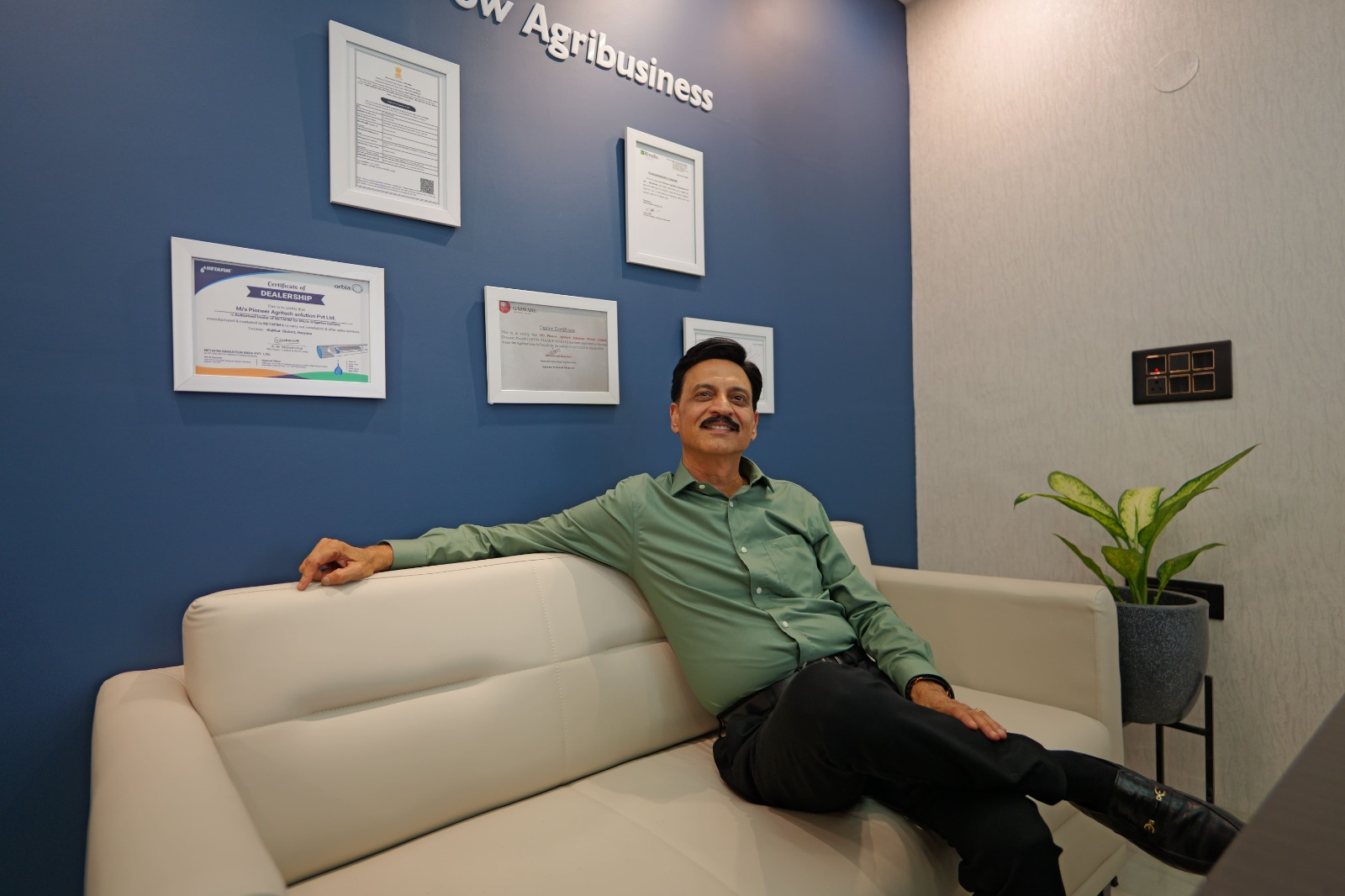
Ambrish Arora, Managing Director, Pioneer Agritech Solutions Pvt Ltd, Mohali, Punjab, explains the right blend of technology, support from governments and financial institutions by way of subsidies, careful planning, and protected cultivation will open up new avenues for agricultural prosperity.
The changing landscape
Protected cultivation is rapidly emerging as one of the most promising sectors of Indian agriculture, with increasing government support, attractive subsidy schemes and improved access to finance. Many experts believe that protected cultivation has the potential to bring about a new green revolution in India by improving productivity, quality and profitability.
Over the last decade, there has been a growing interest among farmers in poly houses, net houses and other protected structures. This growing interest has been driven by rising demand for high-quality fruits, vegetables and flowers, together with increasing climatic uncertainties. Protected cultivation enables farmers to grow crops in a controlled environment, thereby reducing risks and ensuring better yields.
Recent initiatives under the National Horticulture Board (NHB), the National Horticulture Mission (NHM) and the Agriculture Infrastructure Fund (AIF) have made protected cultivation projects more financially viable and accessible to a larger number of farmers.
Creating ideal conditions
Protected cultivation refers to the practice of growing crops under controlled environmental conditions using specially designed structures such as poly houses and net houses. These structures protect crops from adverse weather conditions, insects and diseases while creating an environment that promotes healthy growth and higher productivity & better quality.
Unlike open-field cultivation, protected cultivation allows farmers to regulate temperature, humidity, irrigation and nutrient application. As a result, farmers can produce superior quality crops throughout the year, quality products, and obtain better market prices.
Choosing protected cultivation structures
Four major types of structures are commonly used in India.
· Fan and Pad Poly House: The fan and pad poly house is a high-tech structure equipped with cooling systems like Exhaust Fans, Cooling Pads, Circulation Fans and automation for cultivating high-value crops requiring strict environmental control.
· Naturally Ventilated Poly House: Naturally ventilated poly houses depend on natural airflow for temperature regulation and are widely used for vegetable and flower cultivation across the country.
· Net House: Net houses are among the most popular & economical structures in India to protect against insects and excessive sunlight while ensuring proper ventilation.
· Cable Purlin Net House: The cable purlin structure is a cheaper version of a conventional net house, costing Rs. 8 to 12 lakhs. Many farmers establish such structures without subsidy support because of their affordability.
Weighing the options
Net houses generally perform better in areas where temperatures exceed 35°C to 40°C, such as Punjab, Haryana, Rajasthan, Uttar Pradesh and Madhya Pradesh etc. Better ventilation during summer months makes net houses particularly suitable for these regions.
Poly houses retain more heat because of comparatively lower ventilation levels and cost more than a net house. Poly Houses are recommended for areas where temperatures are low most of the time, like hilly areas, or where rainfall is high. Maintenance costs are also higher in poly houses. Poly sheets usually need replacement after three to four years, whereas shade nets generally last five to six years. Replacing covering material in a poly house may cost approximately ₹7 lakh per acre, while replacement costs in a net house are nearly ₹3.5 lakh per acre.
Net houses are generally less susceptible to storm damage. Floriculture crops such as roses, gerbera, lilies, carnations and orchids perform better under poly house conditions because rainfall can adversely affect flower quality and plant growth.
Choosing the crops
Several crops can be grown successfully under protected cultivation. Popular vegetable crops include capsicum, cucumber, tomato, muskmelon and parsley. Many farmers initially cultivate these vegetable crops as the government subsidy allows these crops only and later diversify according to market demand and profitability.
In floriculture, commonly cultivated crops include roses, gerbera, lilies, carnations, and orchids. These crops have excellent market potential and are also eligible for attractive subsidy schemes.
Unlocking government support
Government support for protected cultivation is available through two major schemes.
· National Horticulture Mission (NHM): NHM is implemented through state governments, and subsidy rates differ from state to state. Additional benefits are often available for Scheduled Castes and Scheduled Tribes or small farmers. Subsidy Budget is limited and is available on First come First Serve basis.
· National Horticulture Board (NHB): The National Horticulture Board provides subsidy support throughout India. NHB applications generally remain open throughout the year, allowing farmers to plan projects according to their convenience. NHB also supports advanced components, including hydroponics, automation systems, and circulation fans. As NHB does not maintain an empanelled vendor list, farmers must exercise caution while selecting a company that has at least five years of experience, a proven NHB project track record, existing projects that can be inspected, in-house fabrication facilities, a dedicated agronomy team, marketing support services, and a minimum structural warranty of three years.
Comparing the schemes
State government schemes frequently operate on a first-come, first-served basis and may be available only during specific periods. NHB, however, generally remains operational throughout the year.
Under NHM, the maximum eligible area is usually limited to 4,000 square metres, i.e One Acre per beneficiary & his dependent family. NHB now permits projects worth up to ₹2 crore, making it more suitable for Commercial/large-scale investments.
The Agriculture Infrastructure Fund has emerged as a major source of financial support for protected cultivation. The Government of India has extended its benefits to individual farmers. The principal benefits under AIF include interest rates capped at 9 per cent, an additional annual interest subsidy of 3 per cent, improved bank willingness to finance projects and the possibility of obtaining loans without collateral in suitable cases.
Opening financial doors
Financial institutions and banks play a crucial role in promoting protected cultivation because these projects require substantial initial investment. Banks generally assess the applicant's credit history, project viability, land suitability, and repayment capacity before sanctioning loans.
The Agriculture Infrastructure Fund has strengthened institutional financing by reducing interest burdens and encouraging banks to support protected cultivation projects. Today, both public and private sector banks are actively financing poly house and net house projects, enabling more farmers and entrepreneurs to adopt modern farming systems.
Harvesting higher profits
Protected cultivation offers excellent income opportunities. Cucumber has a crop cycle of approximately three and a half months, with harvesting commencing within 30 to 40 days. Capsicum generally begins yielding after 60 to 70 days.
Based on conservative estimates, farmers can earn net profits of around ₹8 lakh per acre after accounting for all expenses. Efficient farmers often earn between ₹12 lakh and ₹13 lakh per acre, while even average performers generally earn ₹5 lakh to ₹6 lakh per acre.
Traditional open-field cultivation, by comparison, usually generates only ₹1 lakh to ₹2 lakh per acre.
New rules, new opportunities
Recent revisions in NHB guidelines have significantly improved the attractiveness of protected cultivation. The maximum project limit has increased from ₹1.12 crore to ₹2 crore per family.
The approved cost norm for poly houses has increased from ₹844 per square metre to ₹1,000 per square metre. Hydroponics has also been included under revised guidelines.
Financial/Subsidy assistance for vegetable cultivation, pack houses, land levelling, soil replacement, bore wells, circulation fans, automation systems, vermicompost units and mulching sheets has also increased substantially.
The market connection
Merely establishing a poly house does not guarantee success. Continuous agronomic support is essential for nutrient management, pest control, irrigation scheduling and crop planning. Marketing support is equally important, as reliable market linkages obtain remunerative prices for their produce.
Market linkage is the most important determinant of success in protected cultivation. Farmers generally produce premium-quality vegetables, flowers and exotic crops that require organised marketing systems.
Contract farming arrangements, direct sales to supermarkets, marketing tie-ups and Farmer Producer Organisations can provide assured markets and better price realisation. Proper grading, packaging and post-harvest management further enhance profitability.
Success stories
Protected cultivation has transformed the lives of many farmers across North India. Several farmers who initially started with one acre have expanded to three, four and even five acres after achieving favourable returns.
Professionals such as doctors, advocates and former corporate employees have also entered the sector successfully, demonstrating the profitability and long-term potential of protected cultivation.
Meeting the requirements
Projects applying under NHB should be financially viable, possess suitable land conditions and have proper drainage facilities. Land disputes should not exist, and soil and water quality should be appropriate for cultivation. Land taken on lease is also eligible, provided the lease period exceeds ten years and is properly registered.
Documents required include Aadhaar card, photographs, land ownership records, revenue documents and land maps certified by local authorities.
Training and technical guidance
Government institutions and agricultural universities across India provide free training programmes and other facilities related to protected cultivation.
Farming with technology
Technology has become an integral component of modern protected cultivation. Automation systems enable farmers to regulate irrigation, fertigation, temperature and humidity efficiently.
Drip irrigation systems improve water-use efficiency, while fertigation ensures precise nutrient application. Hydroponics and soilless cultivation systems are gaining popularity because they enable higher productivity using less water and space.
Digital applications, sensors and precision farming technologies are also helping farmers monitor crop performance and make informed management decisions.
Trials and triumphs
Although protected cultivation offers significant opportunities, farmers should also understand its challenges. High initial investment, technical complexity, labour availability, recurring maintenance costs and marketing uncertainties are among the major constraints.
Climate-related risks may damage structures. Therefore, adequate maintenance, insurance coverage and technical support are essential for long-term success.
Protected cultivation offers numerous advantages over conventional farming. Crops remain protected from adverse weather conditions, productivity is substantially higher, and produce quality is superior.
Drip irrigation and precision farming techniques improve water-use efficiency, reduce fertiliser wastage and increase profitability. In many crops, yields under protected cultivation can be four to five times higher.
The road ahead
The future of protected cultivation in India appears extremely promising due to rising consumer demand for fresh vegetables, exotic produce and premium flowers. Government support, technological innovations and increasing awareness among farmers are expected to further accelerate growth, as it has tremendous potential to generate rural employment and attract young entrepreneurs into agriculture.
Growing economic gains
The primary reason for the growing popularity of protected cultivation is its potential to generate significantly higher economic returns compared with conventional farming. Under traditional open-field conditions, farmers are often exposed to unpredictable weather, pest infestations and fluctuating market prices that can adversely affect profitability. Protected cultivation minimises many of these risks and allows farmers to achieve more stable incomes.
The controlled environment inside a poly house or net house enables farmers to cultivate crops throughout the year, which provides opportunities to supply produce during off-season periods when market prices are generally higher. Consequently, farmers can realise premium prices for their produce.
Protected cultivation also facilitates the production of export-quality fruits, vegetables and flowers with uniform size, colour and quality, increased market acceptance and improved price realisation. Premium retail chains, hotels and organised supermarkets increasingly prefer produce cultivated under protected conditions. Another important economic advantage is efficient utilisation of land resources. Since productivity under protected cultivation is considerably higher, farmers can earn greater returns from smaller landholdings. The higher profitability associated with protected cultivation has encouraged many educated people to enter the agricultural sector, and it is increasingly being viewed not merely as a farming practice but as a commercially viable agribusiness opportunity.
Seeds of employment
Protected cultivation has considerable potential to generate employment opportunities in rural areas. Establishment and operation of poly houses and net houses require skilled and semi-skilled labour for a variety of activities, including installation, crop management, harvesting, grading and packaging.
Unlike conventional agriculture, protected cultivation requires continuous crop monitoring and specialised management practices. Consequently, the demand for trained agronomists, technicians and field supervisors has increased significantly.
Protected cultivation also stimulates the growth of ancillary industries. Manufacturing units involved in producing poly sheets, shade nets, drip irrigation systems, fertilisers and greenhouse equipment benefit from increasing demand. Similarly, transport, packaging and marketing sectors also experience growth.
Farmer Producer Organisations and cooperatives can further strengthen rural economies by facilitating collective procurement of inputs and collective marketing of produce. Such initiatives help reduce production costs and improve farmers' bargaining power in the marketplace.
The expansion of protected cultivation can therefore contribute significantly to rural development by generating employment, increasing farm incomes and encouraging entrepreneurship in agriculture.
Nature nurtures growth
Sustainable use of natural resources has become an important concern in modern agriculture. Protected cultivation contributes towards sustainability by promoting efficient utilisation of water, fertilisers and other agricultural inputs.
Water scarcity is becoming a serious challenge in many parts of India. Protected cultivation systems generally utilise drip irrigation, which delivers water directly to the root zone of plants. This method significantly reduces water losses through evaporation and runoff. Compared with conventional irrigation methods, water savings can be substantial.
Similarly, fertigation practices ensure precise application of nutrients according to crop requirements. Efficient nutrient management not only reduces input costs but also minimises nutrient losses and environmental pollution.
Protected cultivation also reduces the incidence of pests and diseases because crops are grown in a relatively controlled environment. Consequently, pesticide use can often be reduced, leading to safer produce and lower environmental impact.
The adoption of hydroponics, soilless cultivation and automation technologies further enhances resource-use efficiency. These technologies enable farmers to produce more using fewer resources, thereby supporting sustainable agricultural development.
As concerns regarding climate change and resource degradation continue to increase, protected cultivation is expected to play an increasingly important role in ensuring sustainable food production.
A thoughtful beginning
Farmers interested in adopting protected cultivation should undertake careful planning before investing in a project. Proper site selection is extremely important. The selected land should have good drainage facilities, reliable water availability and easy access to electricity and roads.
Farmers should also conduct a thorough market assessment before selecting crops. Understanding local demand, price trends and marketing channels is essential for ensuring profitability.
Obtaining proper technical training is strongly recommended. Farmers should participate in training programmes organised by agricultural universities, horticulture departments and recognised institutions to gain practical knowledge about crop management under protected conditions.
Selection of a reliable company for project implementation is equally important. Farmers should verify the company's experience, previous projects and technical support capabilities before finalising any agreement.
Financial planning should also be undertaken carefully. Farmers should prepare realistic estimates of project costs, operational expenses and expected returns. Detailed Project Reports can assist in obtaining bank finance and assessing overall project viability.
Finally, farmers should begin with manageable project sizes and expand gradually as they gain experience. A phased approach reduces risk and allows farmers to develop the necessary technical and managerial skills for long-term success.
Harvesting a brighter future
Protected cultivation represents one of the most promising opportunities in Indian agriculture today. Government subsidies, concessional finance, revised NHB guidelines and support under the Agriculture Infrastructure Fund have created favourable conditions for investment.
With proper planning, technical guidance and effective market linkages, farmers can achieve significantly higher incomes compared with traditional farming systems. The growing number of success stories across India clearly indicates that protected cultivation is a major step towards modern, profitable and sustainable agriculture.
Contact details
Ambrish Arora
Managing Director,
Pioneer Agritech Solutions Pvt Ltd,
Office No.254, IVth Floor, Mohali City Centre-2,
Airport Road, Mohali, Punjab
M: 9814109631
E: info@pioneeragritech.com
The changing landscape
Protected cultivation is rapidly emerging as one of the most promising sectors of Indian agriculture, with increasing government support, attractive subsidy schemes and improved access to finance. Many experts believe that protected cultivation has the potential to bring about a new green revolution in India by improving productivity, quality and profitability.
Over the last decade, there has been a growing interest among farmers in poly houses, net houses and other protected structures. This growing interest has been driven by rising demand for high-quality fruits, vegetables and flowers, together with increasing climatic uncertainties. Protected cultivation enables farmers to grow crops in a controlled environment, thereby reducing risks and ensuring better yields.
Recent initiatives under the National Horticulture Board (NHB), the National Horticulture Mission (NHM) and the Agriculture Infrastructure Fund (AIF) have made protected cultivation projects more financially viable and accessible to a larger number of farmers.
Creating ideal conditions
Protected cultivation refers to the practice of growing crops under controlled environmental conditions using specially designed structures such as poly houses and net houses. These structures protect crops from adverse weather conditions, insects and diseases while creating an environment that promotes healthy growth and higher productivity & better quality.
Unlike open-field cultivation, protected cultivation allows farmers to regulate temperature, humidity, irrigation and nutrient application. As a result, farmers can produce superior quality crops throughout the year, quality products, and obtain better market prices.
Choosing protected cultivation structures
Four major types of structures are commonly used in India.
· Fan and Pad Poly House: The fan and pad poly house is a high-tech structure equipped with cooling systems like Exhaust Fans, Cooling Pads, Circulation Fans and automation for cultivating high-value crops requiring strict environmental control.
· Naturally Ventilated Poly House: Naturally ventilated poly houses depend on natural airflow for temperature regulation and are widely used for vegetable and flower cultivation across the country.
· Net House: Net houses are among the most popular & economical structures in India to protect against insects and excessive sunlight while ensuring proper ventilation.
· Cable Purlin Net House: The cable purlin structure is a cheaper version of a conventional net house, costing Rs. 8 to 12 lakhs. Many farmers establish such structures without subsidy support because of their affordability.
Weighing the options
Net houses generally perform better in areas where temperatures exceed 35°C to 40°C, such as Punjab, Haryana, Rajasthan, Uttar Pradesh and Madhya Pradesh etc. Better ventilation during summer months makes net houses particularly suitable for these regions.
Poly houses retain more heat because of comparatively lower ventilation levels and cost more than a net house. Poly Houses are recommended for areas where temperatures are low most of the time, like hilly areas, or where rainfall is high. Maintenance costs are also higher in poly houses. Poly sheets usually need replacement after three to four years, whereas shade nets generally last five to six years. Replacing covering material in a poly house may cost approximately ₹7 lakh per acre, while replacement costs in a net house are nearly ₹3.5 lakh per acre.
Net houses are generally less susceptible to storm damage. Floriculture crops such as roses, gerbera, lilies, carnations and orchids perform better under poly house conditions because rainfall can adversely affect flower quality and plant growth.
Choosing the crops
Several crops can be grown successfully under protected cultivation. Popular vegetable crops include capsicum, cucumber, tomato, muskmelon and parsley. Many farmers initially cultivate these vegetable crops as the government subsidy allows these crops only and later diversify according to market demand and profitability.
In floriculture, commonly cultivated crops include roses, gerbera, lilies, carnations, and orchids. These crops have excellent market potential and are also eligible for attractive subsidy schemes.
Unlocking government support
Government support for protected cultivation is available through two major schemes.
· National Horticulture Mission (NHM): NHM is implemented through state governments, and subsidy rates differ from state to state. Additional benefits are often available for Scheduled Castes and Scheduled Tribes or small farmers. Subsidy Budget is limited and is available on First come First Serve basis.
· National Horticulture Board (NHB): The National Horticulture Board provides subsidy support throughout India. NHB applications generally remain open throughout the year, allowing farmers to plan projects according to their convenience. NHB also supports advanced components, including hydroponics, automation systems, and circulation fans. As NHB does not maintain an empanelled vendor list, farmers must exercise caution while selecting a company that has at least five years of experience, a proven NHB project track record, existing projects that can be inspected, in-house fabrication facilities, a dedicated agronomy team, marketing support services, and a minimum structural warranty of three years.
Comparing the schemes
State government schemes frequently operate on a first-come, first-served basis and may be available only during specific periods. NHB, however, generally remains operational throughout the year.
Under NHM, the maximum eligible area is usually limited to 4,000 square metres, i.e One Acre per beneficiary & his dependent family. NHB now permits projects worth up to ₹2 crore, making it more suitable for Commercial/large-scale investments.
The Agriculture Infrastructure Fund has emerged as a major source of financial support for protected cultivation. The Government of India has extended its benefits to individual farmers. The principal benefits under AIF include interest rates capped at 9 per cent, an additional annual interest subsidy of 3 per cent, improved bank willingness to finance projects and the possibility of obtaining loans without collateral in suitable cases.
Opening financial doors
Financial institutions and banks play a crucial role in promoting protected cultivation because these projects require substantial initial investment. Banks generally assess the applicant's credit history, project viability, land suitability, and repayment capacity before sanctioning loans.
The Agriculture Infrastructure Fund has strengthened institutional financing by reducing interest burdens and encouraging banks to support protected cultivation projects. Today, both public and private sector banks are actively financing poly house and net house projects, enabling more farmers and entrepreneurs to adopt modern farming systems.
Harvesting higher profits
Protected cultivation offers excellent income opportunities. Cucumber has a crop cycle of approximately three and a half months, with harvesting commencing within 30 to 40 days. Capsicum generally begins yielding after 60 to 70 days.
Based on conservative estimates, farmers can earn net profits of around ₹8 lakh per acre after accounting for all expenses. Efficient farmers often earn between ₹12 lakh and ₹13 lakh per acre, while even average performers generally earn ₹5 lakh to ₹6 lakh per acre.
Traditional open-field cultivation, by comparison, usually generates only ₹1 lakh to ₹2 lakh per acre.
New rules, new opportunities
Recent revisions in NHB guidelines have significantly improved the attractiveness of protected cultivation. The maximum project limit has increased from ₹1.12 crore to ₹2 crore per family.
The approved cost norm for poly houses has increased from ₹844 per square metre to ₹1,000 per square metre. Hydroponics has also been included under revised guidelines.
Financial/Subsidy assistance for vegetable cultivation, pack houses, land levelling, soil replacement, bore wells, circulation fans, automation systems, vermicompost units and mulching sheets has also increased substantially.
The market connection
Merely establishing a poly house does not guarantee success. Continuous agronomic support is essential for nutrient management, pest control, irrigation scheduling and crop planning. Marketing support is equally important, as reliable market linkages obtain remunerative prices for their produce.
Market linkage is the most important determinant of success in protected cultivation. Farmers generally produce premium-quality vegetables, flowers and exotic crops that require organised marketing systems.
Contract farming arrangements, direct sales to supermarkets, marketing tie-ups and Farmer Producer Organisations can provide assured markets and better price realisation. Proper grading, packaging and post-harvest management further enhance profitability.
Success stories
Protected cultivation has transformed the lives of many farmers across North India. Several farmers who initially started with one acre have expanded to three, four and even five acres after achieving favourable returns.
Professionals such as doctors, advocates and former corporate employees have also entered the sector successfully, demonstrating the profitability and long-term potential of protected cultivation.
Meeting the requirements
Projects applying under NHB should be financially viable, possess suitable land conditions and have proper drainage facilities. Land disputes should not exist, and soil and water quality should be appropriate for cultivation. Land taken on lease is also eligible, provided the lease period exceeds ten years and is properly registered.
Documents required include Aadhaar card, photographs, land ownership records, revenue documents and land maps certified by local authorities.
Training and technical guidance
Government institutions and agricultural universities across India provide free training programmes and other facilities related to protected cultivation.
Farming with technology
Technology has become an integral component of modern protected cultivation. Automation systems enable farmers to regulate irrigation, fertigation, temperature and humidity efficiently.
Drip irrigation systems improve water-use efficiency, while fertigation ensures precise nutrient application. Hydroponics and soilless cultivation systems are gaining popularity because they enable higher productivity using less water and space.
Digital applications, sensors and precision farming technologies are also helping farmers monitor crop performance and make informed management decisions.
Trials and triumphs
Although protected cultivation offers significant opportunities, farmers should also understand its challenges. High initial investment, technical complexity, labour availability, recurring maintenance costs and marketing uncertainties are among the major constraints.
Climate-related risks may damage structures. Therefore, adequate maintenance, insurance coverage and technical support are essential for long-term success.
Protected cultivation offers numerous advantages over conventional farming. Crops remain protected from adverse weather conditions, productivity is substantially higher, and produce quality is superior.
Drip irrigation and precision farming techniques improve water-use efficiency, reduce fertiliser wastage and increase profitability. In many crops, yields under protected cultivation can be four to five times higher.
The road ahead
The future of protected cultivation in India appears extremely promising due to rising consumer demand for fresh vegetables, exotic produce and premium flowers. Government support, technological innovations and increasing awareness among farmers are expected to further accelerate growth, as it has tremendous potential to generate rural employment and attract young entrepreneurs into agriculture.
Growing economic gains
The primary reason for the growing popularity of protected cultivation is its potential to generate significantly higher economic returns compared with conventional farming. Under traditional open-field conditions, farmers are often exposed to unpredictable weather, pest infestations and fluctuating market prices that can adversely affect profitability. Protected cultivation minimises many of these risks and allows farmers to achieve more stable incomes.
The controlled environment inside a poly house or net house enables farmers to cultivate crops throughout the year, which provides opportunities to supply produce during off-season periods when market prices are generally higher. Consequently, farmers can realise premium prices for their produce.
Protected cultivation also facilitates the production of export-quality fruits, vegetables and flowers with uniform size, colour and quality, increased market acceptance and improved price realisation. Premium retail chains, hotels and organised supermarkets increasingly prefer produce cultivated under protected conditions. Another important economic advantage is efficient utilisation of land resources. Since productivity under protected cultivation is considerably higher, farmers can earn greater returns from smaller landholdings. The higher profitability associated with protected cultivation has encouraged many educated people to enter the agricultural sector, and it is increasingly being viewed not merely as a farming practice but as a commercially viable agribusiness opportunity.
Seeds of employment
Protected cultivation has considerable potential to generate employment opportunities in rural areas. Establishment and operation of poly houses and net houses require skilled and semi-skilled labour for a variety of activities, including installation, crop management, harvesting, grading and packaging.
Unlike conventional agriculture, protected cultivation requires continuous crop monitoring and specialised management practices. Consequently, the demand for trained agronomists, technicians and field supervisors has increased significantly.
Protected cultivation also stimulates the growth of ancillary industries. Manufacturing units involved in producing poly sheets, shade nets, drip irrigation systems, fertilisers and greenhouse equipment benefit from increasing demand. Similarly, transport, packaging and marketing sectors also experience growth.
Farmer Producer Organisations and cooperatives can further strengthen rural economies by facilitating collective procurement of inputs and collective marketing of produce. Such initiatives help reduce production costs and improve farmers' bargaining power in the marketplace.
The expansion of protected cultivation can therefore contribute significantly to rural development by generating employment, increasing farm incomes and encouraging entrepreneurship in agriculture.
Nature nurtures growth
Sustainable use of natural resources has become an important concern in modern agriculture. Protected cultivation contributes towards sustainability by promoting efficient utilisation of water, fertilisers and other agricultural inputs.
Water scarcity is becoming a serious challenge in many parts of India. Protected cultivation systems generally utilise drip irrigation, which delivers water directly to the root zone of plants. This method significantly reduces water losses through evaporation and runoff. Compared with conventional irrigation methods, water savings can be substantial.
Similarly, fertigation practices ensure precise application of nutrients according to crop requirements. Efficient nutrient management not only reduces input costs but also minimises nutrient losses and environmental pollution.
Protected cultivation also reduces the incidence of pests and diseases because crops are grown in a relatively controlled environment. Consequently, pesticide use can often be reduced, leading to safer produce and lower environmental impact.
The adoption of hydroponics, soilless cultivation and automation technologies further enhances resource-use efficiency. These technologies enable farmers to produce more using fewer resources, thereby supporting sustainable agricultural development.
As concerns regarding climate change and resource degradation continue to increase, protected cultivation is expected to play an increasingly important role in ensuring sustainable food production.
A thoughtful beginning
Farmers interested in adopting protected cultivation should undertake careful planning before investing in a project. Proper site selection is extremely important. The selected land should have good drainage facilities, reliable water availability and easy access to electricity and roads.
Farmers should also conduct a thorough market assessment before selecting crops. Understanding local demand, price trends and marketing channels is essential for ensuring profitability.
Obtaining proper technical training is strongly recommended. Farmers should participate in training programmes organised by agricultural universities, horticulture departments and recognised institutions to gain practical knowledge about crop management under protected conditions.
Selection of a reliable company for project implementation is equally important. Farmers should verify the company's experience, previous projects and technical support capabilities before finalising any agreement.
Financial planning should also be undertaken carefully. Farmers should prepare realistic estimates of project costs, operational expenses and expected returns. Detailed Project Reports can assist in obtaining bank finance and assessing overall project viability.
Finally, farmers should begin with manageable project sizes and expand gradually as they gain experience. A phased approach reduces risk and allows farmers to develop the necessary technical and managerial skills for long-term success.
Harvesting a brighter future
Protected cultivation represents one of the most promising opportunities in Indian agriculture today. Government subsidies, concessional finance, revised NHB guidelines and support under the Agriculture Infrastructure Fund have created favourable conditions for investment.
With proper planning, technical guidance and effective market linkages, farmers can achieve significantly higher incomes compared with traditional farming systems. The growing number of success stories across India clearly indicates that protected cultivation is a major step towards modern, profitable and sustainable agriculture.
Contact details
Ambrish Arora
Managing Director,
Pioneer Agritech Solutions Pvt Ltd,
Office No.254, IVth Floor, Mohali City Centre-2,
Airport Road, Mohali, Punjab
M: 9814109631
E: info@pioneeragritech.com