

Sunil Kumar Agarwal
Orchid farming: a commercial approach
Sunil Kumar Agarwal, COO and Technical Advisor of Darjeeling Gardens Private Limited, Darjeeling, West Bengal, highlights that orchids are among the most valued ornamental plants in the global floriculture market. Renowned for their distinctive forms, vibrant colours, and long shelf life, orchids command strong commercial demand. With appropriate growing conditions and expert management, orchid cultivation offers significant potential as a profitable and sustainable agricultural enterprise.
We began orchid cultivation on a small scale, initially focusing on temperate orchids, which are traditionally grown in hilly regions. There is a common misconception that orchids can only be grown in cooler climates. While many people are aware of tropical orchids and their cultivation methods, very few truly understand the distinction between temperate and tropical orchids or their vast commercial potential.
When we initiated our work with temperate orchids, particularly Cymbidium in 2009, the general belief was that these orchids were confined mainly to Darjeeling. At that time, orchid cultivation was not widely viewed as a commercial enterprise. Recognising this gap, we took a bold step and developed orchids as a structured commercial venture. Since Darjeeling naturally supports cooler temperatures, temperate orchids were a logical starting point, even though the orchid market then was relatively niche and limited.
In 2017, we expanded into tropical and subtropical orchids such as Dendrobium, Vanda, Mokara, Cattleya, and Phalaenopsis varieties that can be cultivated across many regions of India. Today, large-scale commercial orchid farming is well established in South India. However, in North India and the North Eastern states, orchids are still largely grown on a non-commercial or hobby scale, despite the region’s natural advantages.
One of the biggest strengths of tropical regions is their ability to grow almost all orchid varieties. We started with eight acres of land under polyhouse cultivation, with a plant capacity of five to six lakh Dendrobiums alone, apart from several other varieties. Over the years, we have seen growing interest in orchid farming. Although the COVID-19 pandemic caused hesitation among new growers, the Indian orchid market has continued to expand rapidly.
The rise of e-commerce platforms selling orchids clearly reflects this growing demand. Many platforms source orchids from wholesalers and sell them online. Our belief has always been simple and strong: “Orchids can be grown by anyone, anywhere.” At Darjeeling Gardens Private Limited, we grow orchids and supply them to retailers and online resellers through our own e-commerce platform, clickorchid.com. This demonstrates the sheer scale and potential of the market. Orchid cultivation is a highly promising project, and for anyone interested, we are happy to share technical guidance, practical knowledge, planting material, and complete project support based on our experience.
Compared to crops like roses or gerbera which require intensive manpower, strict fertigation schedules, regular pruning, and constant supervision or risk severe losses, orchids offer a clear advantage. Orchids require less water, minimal fertiliser, and very limited use of pesticides or fungicides. Maintaining humidity is the key requirement, making orchid farming less labour-intensive and more resilient.
Another major advantage is longevity. Orchid plants appreciate in value as they age. Unlike roses, which must be replaced after a few harvest cycles, orchids can live and perform for up to 30 years. Even older plants retain strong demand. Varieties such as Sonia Purple and Sonia White are commercially preferred due to their exceptional shelf life, cut flowers can last over a month in a vase.
Despite strong demand in metropolitan cities for flowering plants, consistent supply remains limited. This gap presents a powerful opportunity. With a basic understanding of orchid cultivation, growers can build a sustainable and profitable business. We cultivate both temperate and tropical orchids, including Cymbidium, Dendrobium, Vanda, Cattleya, and Phalaenopsis, offering pot plants, cut flowers, customised displays, and a wide range of local, hybrid, and intergeneric species, proving that orchids truly are a future-ready crop for Indian floriculture.
Tropical orchid production
The key advantage of growing tropical orchids is their wide adaptability, they can be cultivated in nearly 80% of India’s geographical regions, as most parts of the country fall under a tropical climate, excluding some northern and north-eastern areas. A practical entry point is Dendrobium, a popular tropical orchid well suited for commercial projects. Broadly, orchid ventures follow two models: one focuses on raising plants and selling saplings or plants at different growth stages, while the other concentrates exclusively on cut flowers. In plant-based models, growers typically sell small to medium-sized plants or those close to blooming; however, we cater to every size preference, from young plants to flowering specimens. Some projects are designed purely for cut flowers, requiring a focused production strategy. Many successful ventures balance both around 70% pot plants with flowers and 30% cut flowers, an approach particularly effective for Dendrobiums. When 6 to 10 month old plants are used, flowering begins within eight months. As tropical seasonal crops, Dendrobiums produce high-quality flowers mainly between June and September, making them commercially attractive.
During winter, especially in northern and north-eastern regions, orchids enter a dormant phase due to lower temperatures, which still allows projects to run successfully with proper planning. Orchids are slow-growing and low-maintenance plants, requiring minimal manpower and water. Irrigation is needed mainly during hot conditions when plants dry quickly, while maintaining humidity remains the most critical factor. A well-designed polyhouse should have good ventilation, aeration, and air circulation. Since orchids cannot tolerate high light intensity, shade nets must be managed carefully to prevent leaf burn. Humidity can be effectively maintained using misting machines or by keeping the floor moist through sprinklers, one of the most efficient and economical methods. With the right environment, tropical orchids reward growers with consistency, resilience, and strong commercial returns.
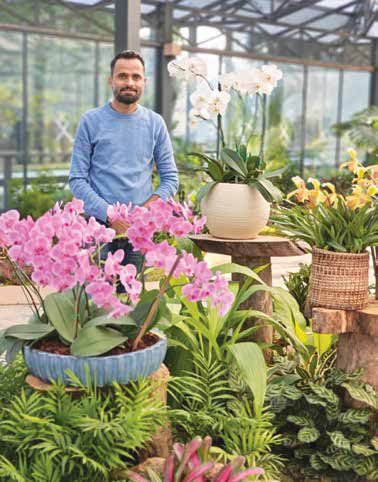
Orchid cultivation strategy
When moving into commercial orchid projects, the approach changes significantly from hobby or small-scale cultivation. Practices such as correct spacing, systematic repotting, and individual pot management become critical. Infrastructure costs largely depend on planning and investment strategy. For example, in a one-acre Dendrobium Sonia project, it is possible to accommodate around 40,000 to 60,000 plants. In cut-flower oriented projects, plant costs are higher due to premium planting material. At an average cost of ₹65 per seedling, investing in 50,000 to 60,000 plants requires nearly ₹30 lakhs. Flowering typically begins six to eight months after planting, sometimes extending up to a year. Each cut flower or stick is priced around ₹15. With a conservative estimate of two to three sticks per plant, total production reaches approximately 1,80,000 sticks, generating revenue close to ₹27 lakhs. As plants mature, flower quality improves, secondary spikes increase, and overall yield rises making older plantations even more profitable and predictable in returns.
Operational efficiency is equally important. Recurring expenses mainly involve ensuring proper aeration, drainage, and airflow. Since orchid roots are aerial, raised beds are essential to prevent waterlogging and to allow sufficient air, light, and moisture. All plants should be cultivated on raised platforms, supported by fans for air circulation and adequate light for healthy growth. Disease management is relatively simple compared to other floriculture crops. Orchids are hardy plants and rarely suffer from serious fungal or bacterial infections, except occasionally during prolonged rainy seasons. Even then, issues are short-lived and easily controlled with minimal, localised spraying. Chemical usage remains low overall. Common pests such as mites and snails may appear but can be effectively managed with basic pesticides. This combination of lower maintenance, controlled costs, and scalable returns makes commercial orchid cultivation a highly attractive and sustainable agribusiness model.
Orchid export potential
On the export front, we are receiving a growing number of enquiries and have already completed two to three export consignments. India enjoys a clear competitive advantage due to relatively low labour and production costs, while transportation and freight expenses remain lower compared to many other producing countries because overall overheads are controlled. This cost efficiency makes orchid cultivation highly viable as a commercial activity. Unlike crops such as roses that demand constant supervision, orchids are low-maintenance; even if left unattended for a few days, they remain unaffected, provided humidity and aeration are properly managed.
At present, we cater primarily to the Indian market, where demand is exceptionally strong. While awareness about orchids is increasing, practical knowledge of cultivation is still limited. To bridge this gap, we actively conduct educational programmes and share training videos on orchid farming. Growers and enthusiasts can visit our platform to understand project execution, gain technical insights, and confidently plan similar orchid cultivation ventures.
Building an orchid industry
My role involves managing the technical execution of orchid projects and ensuring that new crops especially those still emerging in India are cultivated with care and precision. Our objective is to develop orchid cultivation as a fully integrated commercial venture, similar to models seen in countries like Thailand, where growers can access everything at one place, significantly reducing transportation and operational costs. Alongside commercial planning, I oversee research and development, designing crop schedules that suit Indian conditions. Every country has its own climate and challenges, and orchid farming in India cannot simply replicate foreign systems. Tropical weather, pest pressure, fungal issues, and the limited availability of trained technical manpower require locally adapted solutions and careful planning.
I am also responsible for deciding which orchid varieties to grow and how to position them commercially. My journey into orchid cultivation began through my brother, who was already engaged in commercial orchid farming. The projects fascinated me, and working closely with local communities made the experience even more meaningful. While temperate orchids proved challenging to monitor, tropical orchids offered better scalability, and today they form the core of our work though temperate projects continue. Our long-term vision is to establish orchid cultivation as a recognised industry in India. Orchids demand patience, care, and commitment, and seeing the plants bloom after sustained effort is an unmatched and deeply rewarding experience.
Orchid project constraints
One of the primary challenges in orchid projects is the lack of experienced technical professionals. Skilled manpower for orchid cultivation is limited, making it essential to identify interested individuals and invest time in training them. Another major constraint is the availability of planting material, particularly for temperate orchids. These plants must be ordered well in advance, often requiring a waiting period of nearly one and a half years. Orchid nurseries and tissue culture laboratories take considerable time to produce saplings typically 9 to 12 months to reach the final de-flasking stage and rarely maintain ready stock unless prior orders are placed.
Climatic variation presents an additional challenge. In tropical regions such as Kerala, orchids benefit from extended growing seasons, but this also means longer production cycles due to prolonged summers. In contrast, regions like Siliguri offer only about six months of active growth, after which winter conditions require careful plant protection to prevent yellowing and stress. This makes greenhouse and shade-net management critical, particularly in regulating ventilation, closure timings, and irrigation practices. Successful orchid projects therefore depend heavily on precise climate control, advance planning, and consistent technical supervision.
Contact details
Sunil Kumar Agarwal
COO and Technical Advisor of Darjeeling Gardens Private Limited, based in Darjeeling, West Bengal
Mobile: 97333 12397
Email: sunil@darjeelinggardens.com
Orchid farming: a commercial approach
Sunil Kumar Agarwal, COO and Technical Advisor of Darjeeling Gardens Private Limited, Darjeeling, West Bengal, highlights that orchids are among the most valued ornamental plants in the global floriculture market. Renowned for their distinctive forms, vibrant colours, and long shelf life, orchids command strong commercial demand. With appropriate growing conditions and expert management, orchid cultivation offers significant potential as a profitable and sustainable agricultural enterprise.
We began orchid cultivation on a small scale, initially focusing on temperate orchids, which are traditionally grown in hilly regions. There is a common misconception that orchids can only be grown in cooler climates. While many people are aware of tropical orchids and their cultivation methods, very few truly understand the distinction between temperate and tropical orchids or their vast commercial potential.
When we initiated our work with temperate orchids, particularly Cymbidium in 2009, the general belief was that these orchids were confined mainly to Darjeeling. At that time, orchid cultivation was not widely viewed as a commercial enterprise. Recognising this gap, we took a bold step and developed orchids as a structured commercial venture. Since Darjeeling naturally supports cooler temperatures, temperate orchids were a logical starting point, even though the orchid market then was relatively niche and limited.
In 2017, we expanded into tropical and subtropical orchids such as Dendrobium, Vanda, Mokara, Cattleya, and Phalaenopsis varieties that can be cultivated across many regions of India. Today, large-scale commercial orchid farming is well established in South India. However, in North India and the North Eastern states, orchids are still largely grown on a non-commercial or hobby scale, despite the region’s natural advantages.
One of the biggest strengths of tropical regions is their ability to grow almost all orchid varieties. We started with eight acres of land under polyhouse cultivation, with a plant capacity of five to six lakh Dendrobiums alone, apart from several other varieties. Over the years, we have seen growing interest in orchid farming. Although the COVID-19 pandemic caused hesitation among new growers, the Indian orchid market has continued to expand rapidly.
The rise of e-commerce platforms selling orchids clearly reflects this growing demand. Many platforms source orchids from wholesalers and sell them online. Our belief has always been simple and strong: “Orchids can be grown by anyone, anywhere.” At Darjeeling Gardens Private Limited, we grow orchids and supply them to retailers and online resellers through our own e-commerce platform, clickorchid.com. This demonstrates the sheer scale and potential of the market. Orchid cultivation is a highly promising project, and for anyone interested, we are happy to share technical guidance, practical knowledge, planting material, and complete project support based on our experience.
Compared to crops like roses or gerbera which require intensive manpower, strict fertigation schedules, regular pruning, and constant supervision or risk severe losses, orchids offer a clear advantage. Orchids require less water, minimal fertiliser, and very limited use of pesticides or fungicides. Maintaining humidity is the key requirement, making orchid farming less labour-intensive and more resilient.
Another major advantage is longevity. Orchid plants appreciate in value as they age. Unlike roses, which must be replaced after a few harvest cycles, orchids can live and perform for up to 30 years. Even older plants retain strong demand. Varieties such as Sonia Purple and Sonia White are commercially preferred due to their exceptional shelf life, cut flowers can last over a month in a vase.
Despite strong demand in metropolitan cities for flowering plants, consistent supply remains limited. This gap presents a powerful opportunity. With a basic understanding of orchid cultivation, growers can build a sustainable and profitable business. We cultivate both temperate and tropical orchids, including Cymbidium, Dendrobium, Vanda, Cattleya, and Phalaenopsis, offering pot plants, cut flowers, customised displays, and a wide range of local, hybrid, and intergeneric species, proving that orchids truly are a future-ready crop for Indian floriculture.
Tropical orchid production
The key advantage of growing tropical orchids is their wide adaptability, they can be cultivated in nearly 80% of India’s geographical regions, as most parts of the country fall under a tropical climate, excluding some northern and north-eastern areas. A practical entry point is Dendrobium, a popular tropical orchid well suited for commercial projects. Broadly, orchid ventures follow two models: one focuses on raising plants and selling saplings or plants at different growth stages, while the other concentrates exclusively on cut flowers. In plant-based models, growers typically sell small to medium-sized plants or those close to blooming; however, we cater to every size preference, from young plants to flowering specimens. Some projects are designed purely for cut flowers, requiring a focused production strategy. Many successful ventures balance both around 70% pot plants with flowers and 30% cut flowers, an approach particularly effective for Dendrobiums. When 6 to 10 month old plants are used, flowering begins within eight months. As tropical seasonal crops, Dendrobiums produce high-quality flowers mainly between June and September, making them commercially attractive.
During winter, especially in northern and north-eastern regions, orchids enter a dormant phase due to lower temperatures, which still allows projects to run successfully with proper planning. Orchids are slow-growing and low-maintenance plants, requiring minimal manpower and water. Irrigation is needed mainly during hot conditions when plants dry quickly, while maintaining humidity remains the most critical factor. A well-designed polyhouse should have good ventilation, aeration, and air circulation. Since orchids cannot tolerate high light intensity, shade nets must be managed carefully to prevent leaf burn. Humidity can be effectively maintained using misting machines or by keeping the floor moist through sprinklers, one of the most efficient and economical methods. With the right environment, tropical orchids reward growers with consistency, resilience, and strong commercial returns.
Orchid cultivation strategy
When moving into commercial orchid projects, the approach changes significantly from hobby or small-scale cultivation. Practices such as correct spacing, systematic repotting, and individual pot management become critical. Infrastructure costs largely depend on planning and investment strategy. For example, in a one-acre Dendrobium Sonia project, it is possible to accommodate around 40,000 to 60,000 plants. In cut-flower oriented projects, plant costs are higher due to premium planting material. At an average cost of ₹65 per seedling, investing in 50,000 to 60,000 plants requires nearly ₹30 lakhs. Flowering typically begins six to eight months after planting, sometimes extending up to a year. Each cut flower or stick is priced around ₹15. With a conservative estimate of two to three sticks per plant, total production reaches approximately 1,80,000 sticks, generating revenue close to ₹27 lakhs. As plants mature, flower quality improves, secondary spikes increase, and overall yield rises making older plantations even more profitable and predictable in returns.
Operational efficiency is equally important. Recurring expenses mainly involve ensuring proper aeration, drainage, and airflow. Since orchid roots are aerial, raised beds are essential to prevent waterlogging and to allow sufficient air, light, and moisture. All plants should be cultivated on raised platforms, supported by fans for air circulation and adequate light for healthy growth. Disease management is relatively simple compared to other floriculture crops. Orchids are hardy plants and rarely suffer from serious fungal or bacterial infections, except occasionally during prolonged rainy seasons. Even then, issues are short-lived and easily controlled with minimal, localised spraying. Chemical usage remains low overall. Common pests such as mites and snails may appear but can be effectively managed with basic pesticides. This combination of lower maintenance, controlled costs, and scalable returns makes commercial orchid cultivation a highly attractive and sustainable agribusiness model.
Orchid export potential
On the export front, we are receiving a growing number of enquiries and have already completed two to three export consignments. India enjoys a clear competitive advantage due to relatively low labour and production costs, while transportation and freight expenses remain lower compared to many other producing countries because overall overheads are controlled. This cost efficiency makes orchid cultivation highly viable as a commercial activity. Unlike crops such as roses that demand constant supervision, orchids are low-maintenance; even if left unattended for a few days, they remain unaffected, provided humidity and aeration are properly managed.
At present, we cater primarily to the Indian market, where demand is exceptionally strong. While awareness about orchids is increasing, practical knowledge of cultivation is still limited. To bridge this gap, we actively conduct educational programmes and share training videos on orchid farming. Growers and enthusiasts can visit our platform to understand project execution, gain technical insights, and confidently plan similar orchid cultivation ventures.
Building an orchid industry
My role involves managing the technical execution of orchid projects and ensuring that new crops especially those still emerging in India are cultivated with care and precision. Our objective is to develop orchid cultivation as a fully integrated commercial venture, similar to models seen in countries like Thailand, where growers can access everything at one place, significantly reducing transportation and operational costs. Alongside commercial planning, I oversee research and development, designing crop schedules that suit Indian conditions. Every country has its own climate and challenges, and orchid farming in India cannot simply replicate foreign systems. Tropical weather, pest pressure, fungal issues, and the limited availability of trained technical manpower require locally adapted solutions and careful planning.
I am also responsible for deciding which orchid varieties to grow and how to position them commercially. My journey into orchid cultivation began through my brother, who was already engaged in commercial orchid farming. The projects fascinated me, and working closely with local communities made the experience even more meaningful. While temperate orchids proved challenging to monitor, tropical orchids offered better scalability, and today they form the core of our work though temperate projects continue. Our long-term vision is to establish orchid cultivation as a recognised industry in India. Orchids demand patience, care, and commitment, and seeing the plants bloom after sustained effort is an unmatched and deeply rewarding experience.
Orchid project constraints
One of the primary challenges in orchid projects is the lack of experienced technical professionals. Skilled manpower for orchid cultivation is limited, making it essential to identify interested individuals and invest time in training them. Another major constraint is the availability of planting material, particularly for temperate orchids. These plants must be ordered well in advance, often requiring a waiting period of nearly one and a half years. Orchid nurseries and tissue culture laboratories take considerable time to produce saplings typically 9 to 12 months to reach the final de-flasking stage and rarely maintain ready stock unless prior orders are placed.
Climatic variation presents an additional challenge. In tropical regions such as Kerala, orchids benefit from extended growing seasons, but this also means longer production cycles due to prolonged summers. In contrast, regions like Siliguri offer only about six months of active growth, after which winter conditions require careful plant protection to prevent yellowing and stress. This makes greenhouse and shade-net management critical, particularly in regulating ventilation, closure timings, and irrigation practices. Successful orchid projects therefore depend heavily on precise climate control, advance planning, and consistent technical supervision.
Contact details
Sunil Kumar Agarwal
COO and Technical Advisor of Darjeeling Gardens Private Limited, based in Darjeeling, West Bengal
Mobile: 97333 12397
Email: sunil@darjeelinggardens.com