

Dhanraj Deshpande
Strategies for achieving success in organic jowar farming
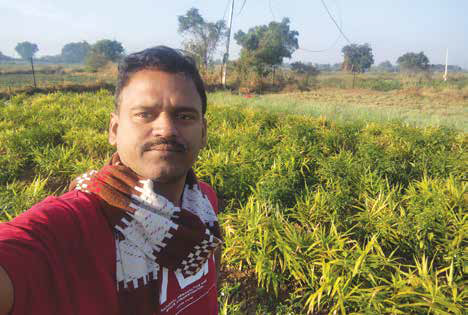
Dhanraj Deshpande, a farmer at Gangey Gaushala, Deshpande Organic Farm, Fakrabad, Maharashtra, explains how growing jowar organically ensures a healthy and natural crop. It supports better nutrition and helps protect the environment. Farmers can achieve good results by adopting smart farming methods. Planning carefully leads to success in organic cultivation.
Sorghum, also known as jowar, is a crop that is compatible with organic cultivation naturally, as it needs less water, and with rainwater alone, it can grow well. It is a drought-resistant crop, which makes it ideal for organic farming. It can also grow in less fertile soil, which is a vital feature of organic cultivation. It can grow with the amount of nutrients available. It also has an inherent resistance to pests and diseases, thereby reducing the requirement for synthetic pesticides during the growing period. Sorghum is used in various ways everywhere, such as grains, syrup, powder, etc. That is why we see sorghum being cultivated everywhere and consumed more. It can also be used as fodder for the cattle. So, it is called a multi-purpose crop. It is highly recommended by doctors also because it has a gluten-free quality, and it is ideal for people diagnosed with diabetes, hypertension, and many other diseases. It contains a high level of fibre and is highly nutritious. Hence, the demand for sorghum is increasing. It can also fit into a crop rotation. So, the main features of sorghum are that it is highly drought-tolerant, survives with minimal water, adapts to any type of soil and less fertile soil, and is adaptable to any conditions. We can achieve food security by cultivating sorghum, as we can use the same as fodder. Since it is highly nutritious, many Gau shaalas also prefer to use sorghum as food for the cattle. It is a heat-tolerant crop. The changing climatic conditions do not affect the growth of sorghum.
Nowadays, we are seeing organic farming gaining importance. The organic carbon in the soil is depleting because of the heavy use of chemical fertilisers, pesticides, insecticides, etc. Farmers are forced to use them on commercial crops for survival. It affects the organic carbon. It is very important now we focus on organic carbon for survival. Hence, organic farming is gaining importance. This type of farming helps in healthy plants, environment, and yield, apart from better productivity. It is nothing but traditional farming with a scientific approach to farming. It is based on the GauAadharit Kheti model, which is cow-based farming. This type of farming requires cow dung and cow urine, which are used as a pesticide. These two are used for the nutrition of the soil. It is environmentally friendly, gives food security, and provides nutritious food. We should ensure that our food is pure and natural. To begin with organic farming, farmers can go for jowar.
When we cultivate this organic crop, we should ensure organic certification to get the proper rate and cost for the products. Many agencies offer organic certification. The certification is based on the conditions that no chemical pesticide or fertiliser is used. Once the certification is issued, people prefer to buy this produce even if the price is slightly higher. It is protected at every stage, right from production to packaging. Harvesting generally means sowing seeds, cultivating, and harvesting. In the case of organic farming, even at the stages of storing and handling, production, and packaging, the produce has to be protected. The organic certification is based on the fact that the produce is fully chemical-free, and strict auditing is done. The auditor visits the field, audits the farm, crop, soil, and water, and only when it fulfils all the conditions, the certification is issued. This is as per the government norms to take care of the crop health and soil health. NPOP (National Program for Organic Production), NOP, and PGS are some such standard measures available in India. These certifications are to be produced if the customer demands.
Key preparation steps
During organic jowar farming, soil preparation is very important. We need to select a field that has a good drainage system, suitable soil texture, and pH. We have to test the soil for pH, nutrient content, and organic matter. Then, we can take up jowar cultivation in that field. Ploughing the field up to 15 to 20 cm depth to loosen the soil and to break clots should be done. We can then add compost, manure, or green manure to improve soil fertility. We have to mix the soil thoroughly for even distribution of the nutrients. Ridges need to be created to facilitate water harvesting and reduce soil erosion. We have to apply a layer of organic mulch to retain moisture to prevent weeds from growing, apart from good soil health and nutrients. Next, we need to select seeds from a good company or seed bank. We can preserve our own seeds to be used in the future. The seeds should have traits such as tolerance, disease resistance, and high yield potential. The seeds should be adaptable to local conditions. Then we need to treat the seeds using a cow urine mixture, neem seed, and kernel powder. Garlic extract and turmeric powder are very good. Any chemical seed treatment should be avoided. The seeds should be kept in a fully dry place before using them in the future.
We can also take up crop rotation and intercropping. Crop rotation prevents diseases, improves soil fertility, and the quality of crops, apart from reducing soil erosion and nutrient depletion. Jowar can be intercropped with legumes, cereals, chickpea, etc. We can use oil seeds like sunflower, pigeon pea, pulses, also to benefit the crops and environment, and to prevent weed attack. Management of pests and diseases is very important in organic cultivation. The crop rotation encourages beneficial insects like ladybugs that prey on the pests. Pest control can be done by using garlic, chilli, and a soap solution. We can also use artificial sticky traps, yellow traps, mesh screens, and fine nets to prevent pests from reaching the crop. Marigolds, basil, and mint repel pests.
We must then focus on the market opportunities. We must do proper labelling, packaging, cleaning, and grading, which are needed for marketing of jowar in both urban and rural markets. Jowar is also from the millet family, and everyone is preferring millet now in view of the health constraints. We can notice that organic carbon is more in organic farming than the traditional farming. Organic farming is nothing but cow-based farming. We mainly use cow dung and urine for jowar crops. We get huge opportunities when we sell organic certified products, and a larger number of people buy them.
Jowar’s unique strengths
Jowar is a drought-prone crop. Wherever there is a water crisis, we can opt for jowar cultivation as it requires less water. The crop is highly adaptable to any type of soil, even if less fertile, and gives a good yield. Organically grown jowar has a huge demand in the market, with people opting for millets, and jowar being the main millet. When cultivating the other millets, there are a few concerns, but in cultivating jowar, any environment or climate suits the jowar. Also, it is a gluten-free crop, and people go for this.
Natural farming techniques
We need to enhance soil health through crop rotation. We can cultivate many crops along with jowar to improve the nitrogen content in the soil, and this improves soil quality and health. Using cow dung and cow urine is the basic practice we need to follow to prepare the jeevamruth and use it as a fertilizer. We can mix this with soil to enhance the quality of the soil. The Jowar crop itself can resist pests and diseases. When we use organic practices like using cow urine and cow dung, which is mixed and kept for 15 to 20 days, we can control pests and diseases. We can also use curd and such natural things. In these ways, we can reduce pests and diseases attacking the jowar crop.
Better yield through rotation
Crop rotation is very important because when we continue to grow the same crop in the same field every year, we can see the difference in the yield in the following years. The soil quality has to be improved. If the landholding is huge, like 15 or 20 acres, it may not be possible to apply cow dung and urine or jeevamrut. So, here crop rotation is the best and effective method to improve the soil fertility and nutrition. Legumes and pigeon pea are the best examples. When we cultivate them, we can see a good quality and yield of jowar. We can also use oil seeds, vegetables like okra or chilli. These are some crops used in crop rotation or intercropping to improve soil fertility and soil health.
Nutrition through organics
When we use organic fertilisers or biopesticides, they add to the nutritional value of the soil. One kg of jowar from our farm gives more nutritional value than 5 kgs of jowar from other farms. This is why our customers are convinced that if they buy organic grains, they get higher nutritional value. If we want healthy food, we need to go for organic products. Our produce is high in nutrition, good for the health of the humans, and improves their health. People can visit our farm, see how we run the initiative, and grow jowar in almost 50% of our land. It is not possible to give water in all the areas, as ours is a water crisis area. So we are growing jowar in most of the places and harvesting it.
Post-harvest care tips
We need not give a continuous water supply to jowar. In October, we give water. During the rainy season, we sow the jowar, and so it needs just one or two rains. Within 4 months, it grows well and gives a good yield. We can use sprinklers when we have fewer water resources. Drip irrigation was not found to be effective as per our experiences. But sprinklers can work when the crop size is small.
Biodiversity has a major role in organic jowar cultivation. It improves the nutritional value, makes management easy, and improves soil fertility. The yield is also very good.
I don’t think there will be any post-harvest losses because all the methods we follow are organic. We need to take care of how to store the jowar seeds in a separate storage room. We should use neem leaves, turmeric powder, and other methods to store the jowar seeds properly so that insects do not affect them. Post-harvest efforts include transportation, storing, and then delivering to the customers. The end-users also should take care not to use any chemicals to preserve the grains from insects. These measures will reduce the post-harvest losses.
High-value millet opportunities
The demand for organic jowar is increasing leaps and bounds. Among all the millets available, the yield of jowar is high. We can prepare many by-products from jowar. People are making dosa batter, biscuits, cookies, and noodles from jowar. When the jowar is organically grown, the demand is high. We can go for certification from agencies in India. NPOP, NOP, and many other certification bodies. When we want to export our jowar, we need to approach NOP. For domestic sales, NPOP is enough. We need to adhere to the standards to get identification for the products. To get a higher price for the product, we need to get the certification. Without it, people will not believe, the produce is organically grown. People will be willing to pay extra cost if the crop has the certification. The cultivation cost is also less. With less investment, farmers can get a good yield, create their own marketing chain, and sell the products easily.
When we do farming in groups, the monitoring issue comes in. We have to assure the government that we will monitor each other. The auditor physically visits the field, checks the crops randomly, sends them to the NABL-accredited lab, and verifies if the crops fulfill all the criteria. Then we get the certification. Lab testing is essential for the traceability of the crop. Nowadays, we are also witnessing satellite-based monitoring, which means the government will monitor the crop through satellites. Technology may intervene in this.
Contact details
Dhanraj Deshpande
Farmer, Gangey Gaushala, Deshpande Organic Farm, Fakrabad, Ahmednagar, 414001
Email:dhanraj.deshpande@gmail.com
Mob: 9422312097
Strategies for achieving success in organic jowar farming
Dhanraj Deshpande, a farmer at Gangey Gaushala, Deshpande Organic Farm, Fakrabad, Maharashtra, explains how growing jowar organically ensures a healthy and natural crop. It supports better nutrition and helps protect the environment. Farmers can achieve good results by adopting smart farming methods. Planning carefully leads to success in organic cultivation.
Sorghum, also known as jowar, is a crop that is compatible with organic cultivation naturally, as it needs less water, and with rainwater alone, it can grow well. It is a drought-resistant crop, which makes it ideal for organic farming. It can also grow in less fertile soil, which is a vital feature of organic cultivation. It can grow with the amount of nutrients available. It also has an inherent resistance to pests and diseases, thereby reducing the requirement for synthetic pesticides during the growing period. Sorghum is used in various ways everywhere, such as grains, syrup, powder, etc. That is why we see sorghum being cultivated everywhere and consumed more. It can also be used as fodder for the cattle. So, it is called a multi-purpose crop. It is highly recommended by doctors also because it has a gluten-free quality, and it is ideal for people diagnosed with diabetes, hypertension, and many other diseases. It contains a high level of fibre and is highly nutritious. Hence, the demand for sorghum is increasing. It can also fit into a crop rotation. So, the main features of sorghum are that it is highly drought-tolerant, survives with minimal water, adapts to any type of soil and less fertile soil, and is adaptable to any conditions. We can achieve food security by cultivating sorghum, as we can use the same as fodder. Since it is highly nutritious, many Gau shaalas also prefer to use sorghum as food for the cattle. It is a heat-tolerant crop. The changing climatic conditions do not affect the growth of sorghum.
Nowadays, we are seeing organic farming gaining importance. The organic carbon in the soil is depleting because of the heavy use of chemical fertilisers, pesticides, insecticides, etc. Farmers are forced to use them on commercial crops for survival. It affects the organic carbon. It is very important now we focus on organic carbon for survival. Hence, organic farming is gaining importance. This type of farming helps in healthy plants, environment, and yield, apart from better productivity. It is nothing but traditional farming with a scientific approach to farming. It is based on the GauAadharit Kheti model, which is cow-based farming. This type of farming requires cow dung and cow urine, which are used as a pesticide. These two are used for the nutrition of the soil. It is environmentally friendly, gives food security, and provides nutritious food. We should ensure that our food is pure and natural. To begin with organic farming, farmers can go for jowar.
When we cultivate this organic crop, we should ensure organic certification to get the proper rate and cost for the products. Many agencies offer organic certification. The certification is based on the conditions that no chemical pesticide or fertiliser is used. Once the certification is issued, people prefer to buy this produce even if the price is slightly higher. It is protected at every stage, right from production to packaging. Harvesting generally means sowing seeds, cultivating, and harvesting. In the case of organic farming, even at the stages of storing and handling, production, and packaging, the produce has to be protected. The organic certification is based on the fact that the produce is fully chemical-free, and strict auditing is done. The auditor visits the field, audits the farm, crop, soil, and water, and only when it fulfils all the conditions, the certification is issued. This is as per the government norms to take care of the crop health and soil health. NPOP (National Program for Organic Production), NOP, and PGS are some such standard measures available in India. These certifications are to be produced if the customer demands.
Key preparation steps
During organic jowar farming, soil preparation is very important. We need to select a field that has a good drainage system, suitable soil texture, and pH. We have to test the soil for pH, nutrient content, and organic matter. Then, we can take up jowar cultivation in that field. Ploughing the field up to 15 to 20 cm depth to loosen the soil and to break clots should be done. We can then add compost, manure, or green manure to improve soil fertility. We have to mix the soil thoroughly for even distribution of the nutrients. Ridges need to be created to facilitate water harvesting and reduce soil erosion. We have to apply a layer of organic mulch to retain moisture to prevent weeds from growing, apart from good soil health and nutrients. Next, we need to select seeds from a good company or seed bank. We can preserve our own seeds to be used in the future. The seeds should have traits such as tolerance, disease resistance, and high yield potential. The seeds should be adaptable to local conditions. Then we need to treat the seeds using a cow urine mixture, neem seed, and kernel powder. Garlic extract and turmeric powder are very good. Any chemical seed treatment should be avoided. The seeds should be kept in a fully dry place before using them in the future.
We can also take up crop rotation and intercropping. Crop rotation prevents diseases, improves soil fertility, and the quality of crops, apart from reducing soil erosion and nutrient depletion. Jowar can be intercropped with legumes, cereals, chickpea, etc. We can use oil seeds like sunflower, pigeon pea, pulses, also to benefit the crops and environment, and to prevent weed attack. Management of pests and diseases is very important in organic cultivation. The crop rotation encourages beneficial insects like ladybugs that prey on the pests. Pest control can be done by using garlic, chilli, and a soap solution. We can also use artificial sticky traps, yellow traps, mesh screens, and fine nets to prevent pests from reaching the crop. Marigolds, basil, and mint repel pests.
We must then focus on the market opportunities. We must do proper labelling, packaging, cleaning, and grading, which are needed for marketing of jowar in both urban and rural markets. Jowar is also from the millet family, and everyone is preferring millet now in view of the health constraints. We can notice that organic carbon is more in organic farming than the traditional farming. Organic farming is nothing but cow-based farming. We mainly use cow dung and urine for jowar crops. We get huge opportunities when we sell organic certified products, and a larger number of people buy them.
Jowar’s unique strengths
Jowar is a drought-prone crop. Wherever there is a water crisis, we can opt for jowar cultivation as it requires less water. The crop is highly adaptable to any type of soil, even if less fertile, and gives a good yield. Organically grown jowar has a huge demand in the market, with people opting for millets, and jowar being the main millet. When cultivating the other millets, there are a few concerns, but in cultivating jowar, any environment or climate suits the jowar. Also, it is a gluten-free crop, and people go for this.
Natural farming techniques
We need to enhance soil health through crop rotation. We can cultivate many crops along with jowar to improve the nitrogen content in the soil, and this improves soil quality and health. Using cow dung and cow urine is the basic practice we need to follow to prepare the jeevamruth and use it as a fertilizer. We can mix this with soil to enhance the quality of the soil. The Jowar crop itself can resist pests and diseases. When we use organic practices like using cow urine and cow dung, which is mixed and kept for 15 to 20 days, we can control pests and diseases. We can also use curd and such natural things. In these ways, we can reduce pests and diseases attacking the jowar crop.
Better yield through rotation
Crop rotation is very important because when we continue to grow the same crop in the same field every year, we can see the difference in the yield in the following years. The soil quality has to be improved. If the landholding is huge, like 15 or 20 acres, it may not be possible to apply cow dung and urine or jeevamrut. So, here crop rotation is the best and effective method to improve the soil fertility and nutrition. Legumes and pigeon pea are the best examples. When we cultivate them, we can see a good quality and yield of jowar. We can also use oil seeds, vegetables like okra or chilli. These are some crops used in crop rotation or intercropping to improve soil fertility and soil health.
Nutrition through organics
When we use organic fertilisers or biopesticides, they add to the nutritional value of the soil. One kg of jowar from our farm gives more nutritional value than 5 kgs of jowar from other farms. This is why our customers are convinced that if they buy organic grains, they get higher nutritional value. If we want healthy food, we need to go for organic products. Our produce is high in nutrition, good for the health of the humans, and improves their health. People can visit our farm, see how we run the initiative, and grow jowar in almost 50% of our land. It is not possible to give water in all the areas, as ours is a water crisis area. So we are growing jowar in most of the places and harvesting it.
Post-harvest care tips
We need not give a continuous water supply to jowar. In October, we give water. During the rainy season, we sow the jowar, and so it needs just one or two rains. Within 4 months, it grows well and gives a good yield. We can use sprinklers when we have fewer water resources. Drip irrigation was not found to be effective as per our experiences. But sprinklers can work when the crop size is small.
Biodiversity has a major role in organic jowar cultivation. It improves the nutritional value, makes management easy, and improves soil fertility. The yield is also very good.
I don’t think there will be any post-harvest losses because all the methods we follow are organic. We need to take care of how to store the jowar seeds in a separate storage room. We should use neem leaves, turmeric powder, and other methods to store the jowar seeds properly so that insects do not affect them. Post-harvest efforts include transportation, storing, and then delivering to the customers. The end-users also should take care not to use any chemicals to preserve the grains from insects. These measures will reduce the post-harvest losses.
High-value millet opportunities
The demand for organic jowar is increasing leaps and bounds. Among all the millets available, the yield of jowar is high. We can prepare many by-products from jowar. People are making dosa batter, biscuits, cookies, and noodles from jowar. When the jowar is organically grown, the demand is high. We can go for certification from agencies in India. NPOP, NOP, and many other certification bodies. When we want to export our jowar, we need to approach NOP. For domestic sales, NPOP is enough. We need to adhere to the standards to get identification for the products. To get a higher price for the product, we need to get the certification. Without it, people will not believe, the produce is organically grown. People will be willing to pay extra cost if the crop has the certification. The cultivation cost is also less. With less investment, farmers can get a good yield, create their own marketing chain, and sell the products easily.
When we do farming in groups, the monitoring issue comes in. We have to assure the government that we will monitor each other. The auditor physically visits the field, checks the crops randomly, sends them to the NABL-accredited lab, and verifies if the crops fulfill all the criteria. Then we get the certification. Lab testing is essential for the traceability of the crop. Nowadays, we are also witnessing satellite-based monitoring, which means the government will monitor the crop through satellites. Technology may intervene in this.
Contact details
Dhanraj Deshpande
Farmer, Gangey Gaushala, Deshpande Organic Farm, Fakrabad, Ahmednagar, 414001
Email:dhanraj.deshpande@gmail.com
Mob: 9422312097